7092453
CD195 Mouse anti-Human, APC, Clone: 2D7/CCR5, BD
Mouse Monoclonal Antibody
Manufacturer: Fischer Scientific
The price for this product is unavailable. Please request a quote
Antigen
CD195
Applications
Flow Cytometry
Conjugate
APC
Regulatory Status
RUO
Formulation
Aqueous buffered solution containing BSA and ≤0.09% sodium azide.
Isotype
IgG2a κ
Purification Method
Affinity Purified
Description
CCR5; C-C chemokine receptor type 5; CC-CKR-5; CKR5; CHEMR13
Clone
2D7/CCR5
Classification
Monoclonal
Host Species
Mouse
Target Species
Human
Immunogen
Human CCR5 Transfected Cell Line
Primary or Secondary
Primary
Content And Storage
Store undiluted at 4°C and protected from prolonged exposure to light. Do not freeze.
Related Products

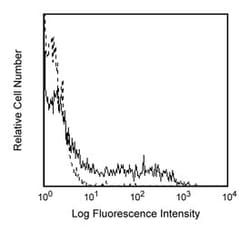
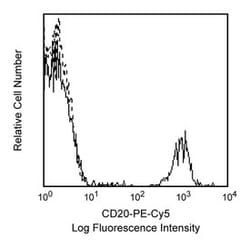
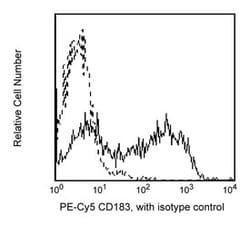
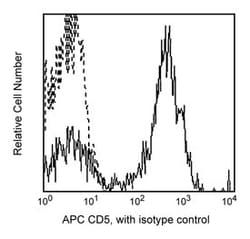
Description
- The 2D7/CCR5 monoclonal antibody specifically binds to the human chemokine receptor, CCR5
- CCR5 is also known as CD195
- CCR5 is a seven transmembrane-spanning G protein-associated molecule
- CCR5 belongs to the beta chemokine receptor family
- It is expressed on a subset of T lymphocytes (CD3+CD45RO+CD95+)
- CCR5 regulates lymphocyte chemotaxis activation and transendothelial migration during inflammation
- It signals a response to at least three chemokines: RANTES and macrophage inflammatory protein-1 (MIP-1), and monocyte chemoattractant protein 2 (MCP-2)
- Additionally, CCR5 has been found to be a co-receptor for macrophage-tropic HIV-1 on CD4+ cells, a characteristic that is important in viral transmission
- Reports indicate that individuals who have partial (heterozygous) or complete (homozygous) deletion of the CCR5 allele, demonstrate resistance to HIV infection
- This antibody has been shown to block ligand and gp120 binding
- It is also able to neutralize HIV infection.