7144540
NCBP1/CBP80 Polyclonal Antibody, Bethyl Laboratories
Rabbit Polyclonal Antibody
Manufacturer: Fischer Scientific
The price for this product is unavailable. Please request a quote
Antigen
NCBP1/CBP80
Classification
Polyclonal
Form
Liquid
Regulatory Status
RUO
Formulation
TBS with 0.1% BSA and 0.09% sodium azide
Gene Alias
RP11-546O6.1, CBP80, MGC2087, NCBP, Sto1, 80 kDa nuclear cap-binding protein; NCBP 80 kDa subunit; nuclear cap-binding protein subunit 1
Immunogen
Between 482 and 532
Primary or Secondary
Primary
Content And Storage
4° C
Gene
NCBP1
Applications
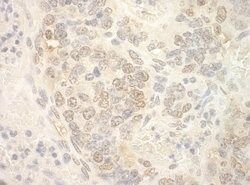
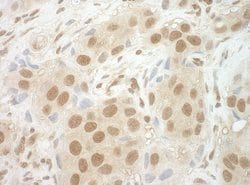
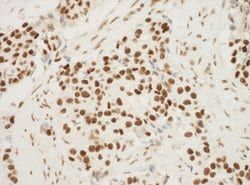
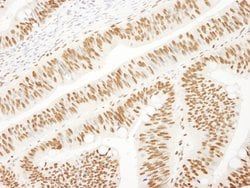
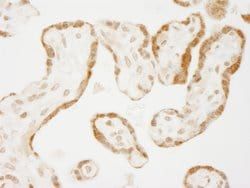
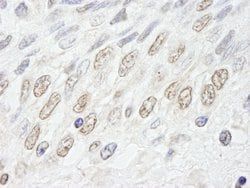
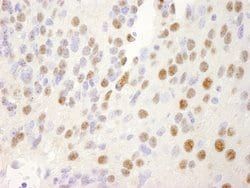
Immunohistochemistry
Conjugate
Unconjugated
Host Species
Rabbit
Target Species
Human, Mouse
Gene Accession No.
Q09161, Q3UYV9
Gene ID (Entrez)
433702, 4686
Isotype
IgG
Purification Method
Antigen affinity chromatography
Product Type
Antibody
Related Products
Description
- The recommended shelf life for this product is 1 year from date of receipt
- Based on 100% sequence identity, this antibody is predicted to react with Chicken, Turkey, Bovine, Dog, Horse, Rabbit, Guinea pig_10141, Pig, Panda, Orangutan, Monk NCBP1, also known as CBP80, is a component of the nuclear cap-binding protein complex (CBC), which binds to the monomethylated 5' cap of nascent pre-mRNA in the nucleoplasm
- NCBP1 promotes high-affinity mRNA-cap binding and associates with the CTD of RNA polymerase II
- The CBC promotes pre-mRNA splicing, 3'-end processing, RNA nuclear export, and nonsense-mediated mRNA decay
- Recent evidence has shown that cellular-cap-binding proteins such as NCBP1 associate with influenza virus mRNAs, suggesting that these viral mRNAs may follow the normal cellular pathways for splicing, nuclear export, and translation.