7190999
DYKDDDDK Polyclonal Antibody, Rockland™
Rabbit Polyclonal Antibody
Manufacturer: Fischer Scientific
The price for this product is unavailable. Please request a quote
Antigen
DYKDDDDK
Applications
ELISA, Immunohistochemistry, Immunoprecipitation, Western Blot
Conjugate
Unconjugated
Host Species
Rabbit
Formulation
0.02M potassium phosphate with 0.15M NaCl and 0.01% sodium azide; pH 7.2
Primary or Secondary
Primary
Product Type
Antibody
Concentration
1.2 mg/mL
Classification
Polyclonal
Form
Liquid
Regulatory Status
RUO
Gene Alias
DDDDK; DDDDK epitope tag; ECS epitope tag; ECS tag; FLAG; FLAG Tag
Content And Storage
-20°C, Avoid Freeze/Thaw Cycles
Related Products

Description
- Store vial at -20°C prior to opening
- Aliquot contents and freeze at -20°C or below for extended storage
- Avoid cycles of freezing and thawing
- Centrifuge product if not completely clear after standing at room temperature
- This product is stable for several weeks at 4°C as an undiluted liquid
- Dilute only prior to immediate use
- This affinity purified antibody is directed against the FLAGTM motif and is useful in determining its presence in various assays
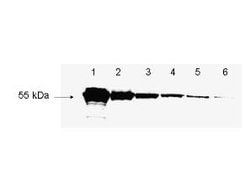
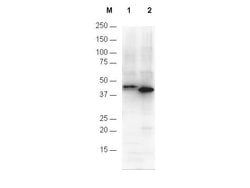
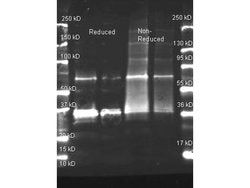
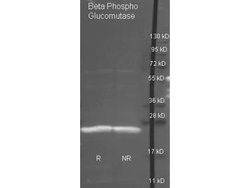
- This polyclonal anti-FLAGTM tag antibody detects over-expressed proteins containing the FLAGTM epitope tag
- In western blotting of bacterial extracts, the antibody does not cross-react with endogenous proteins
- DYKDDDDK Tag (FLAG™ tag, FLAG octapeptide) is a polypeptide protein tag that can be added to a protein using recombinant DNA technology
- The FLAG tag structure has been optimized for compatibility with the proteins it is attached to, in that it is more hydrophilic than other common epitope tags and therefore less likely to denature or inactivate proteins to which it is appended
- A FLAG tag can be used in many different assays that require recognition by an antibody
- If there is no antibody against the studied protein, adding a FLAG tag to this protein allows one to follow the protein with an antibody against the FLAG sequence
- Examples are cellular localization studies by immunofluorescence or detection by SDS PAGE protein electrophoresis
- Tagging with xxxDDDDK may be done at the N-terminus, N-terminus preceded by a methionine residue, C-terminus, and in internal positions of the target protein
- The small size of the epitope tag and its high hydrophilicity tend to decrease the possibility of interference with protein expression, proteolytic maturation, antigenicity and function
- The enterokinase cleavage site allows it to be completely removed from the purified fusion proteins
- FLAG is a trademark of Sigma-Aldrich Biotechnology LP