7191109
MLF1 Polyclonal Antibody, Rockland™
Rabbit Polyclonal Antibody
Manufacturer: Fischer Scientific
The price for this product is unavailable. Please request a quote
Antigen
MLF1
Applications
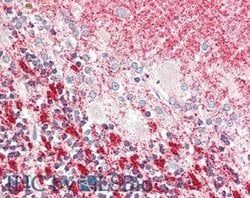
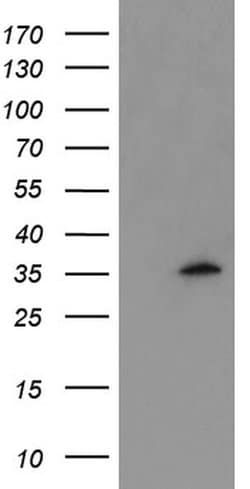
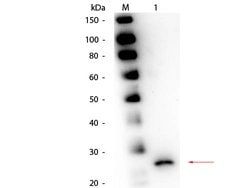
ELISA, Immunohistochemistry, Immunohistochemistry (Paraffin), Western Blot
Conjugate
Unconjugated
Host Species
Rabbit
Target Species
Human
Gene Accession No.
P58340
Gene ID (Entrez)
4291
Primary or Secondary
Primary
Product Type
Antibody
Concentration
0.88 mg/mL
Classification
Polyclonal
Form
Liquid
Regulatory Status
RUO
Formulation
0.02M potassium phosphate with 0.15M NaCl and 0.01% sodium azide; pH 7.2
Gene Alias
Hematopoietic lineage switch 7; Hls7; Mlf1; MLF-1; Myelodysplasia-myeloid leukemia factor 1; Myeloid leukemia factor 1; testis tissue sperm-binding protein Li 49e
Gene Symbols
MLF1
Content And Storage
-20°C, Avoid Freeze/Thaw Cycles
Gene
MLF1
Related Products

Description
- Store vial at -20°C prior to opening
- Aliquot contents and freeze at -20°C or below for extended storage
- Avoid cycles of freezing and thawing
- Centrifuge product if not completely clear after standing at room temperature
- This product is stable for several weeks at 4°C as an undiluted liquid
- Dilute only prior to immediate use
- Directed against human MLF1IP protein
- A BLAST analysis was used to suggest cross-reactivity with MLF1IP protein from human, chimpanzee (98%), horse (72%), bovine (69%), dog (65%), mouse (56%), rat (55%) and chicken (47%) sources based on homology with the immunizing sequence
- Reactivity against homologues from other sources is not known
- SERBP1 may play a role in the regulation of mRNA stability
- It binds to the 3'-most 134 nt of the SERPINE1/PAI1 mRNA, a region which confers cyclic nucleotide regulation of message decay.