CD137 (4-1BB) Monoclonal Antibody (4B4 (4B4-1)), Alexa Fluor™ 700, eBioscience™, Invitrogen™
Mouse Monoclonal Antibody
Manufacturer: Fischer Scientific
The price for this product is unavailable. Please request a quote
Antigen
CD137 (4-1BB)
Concentration
5 μL/Test
Classification
Monoclonal
Form
Liquid
Regulatory Status
RUO
Formulation
PBS with 0.2% BSA and 0.09% sodium azide; pH 7.2
Gene Alias
4 1 BB; 41BB; 4-1BB; 4-1BB ligand receptor; A930040I11Rik; AA408498; AI325004; Cd137; CD137 antigen; CDw137; EGK_00183; homolog of mouse 4-1BB; ILA; induced by lymphocyte activation (ILA); interleukin-activated receptor, homolog of mouse Ly63; Ly63; receptor protein 4-1BB; s4 1 BB; s4 1BB; s41BB; sCD137; secreted CD137 antigen; soluble 4 1 BB; soluble 4 1BB; soluble 41BB; soluble CD137; T cell antigen ILA; T-cell antigen 4-1BB; T-cell antigen 4-1BB homolog; T-cell antigen ILA; TNF receptor superfamily member 9; TNFRSF9; Tumor necrosis factor receptor superfamily member 9; tumor necrosis factor receptor superfamily, member 9
Gene Symbols
TNFRSF9
Primary or Secondary
Primary
Content And Storage
4° C, store in dark, DO NOT FREEZE!
Gene
TNFRSF9
Clone
4B4 (4B4-1)
Applications
Flow Cytometry
Conjugate
Alexa Fluor 700
Host Species
Mouse
Target Species
Human
Gene Accession No.
Q07011
Gene ID (Entrez)
3604
Isotype
IgG1 κ
Purification Method
Affinity chromatography
Product Type
Antibody
Related Products
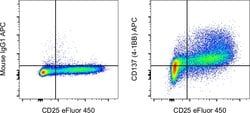

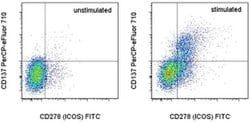
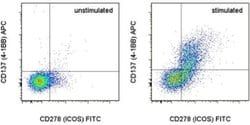
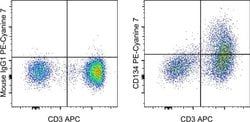
Description
- CD137, also known as TNFRSF9 or 4-1BB, is an inducible costimulatory molecule expressed mainly on activated T cells
- Its ligand, known as 4-1BBL, is expressed on activated macrophages, mature B cells, hematopoietic stem cells, and myeloid progenitor cells
- CD137 signaling leads to maintaining the survival of activated T cells and CD8+ memory T cells, and clonal expansion of T cells, but also to suppressing myelopoiesis and dendritic cell development
- Triggered CD137 induces a cytokine release profile regulating peripheral monocyte survival
- Soluble forms of CD137 may provide negative control mechanism for some immune responses.