CD197 (CCR7) Monoclonal Antibody (3D12), eBioscience™, Invitrogen™
Rat Monoclonal Antibody
Manufacturer: Fischer Scientific
The price for this product is unavailable. Please request a quote
Antigen
CD197 (CCR7)
Concentration
0.5 mg/mL
Classification
Monoclonal
Form
Liquid
Regulatory Status
RUO
Formulation
PBS with 0.09% sodium azide; pH 7.2
Gene Alias
BLR2; Bukitt's lymphoma receptor 2; CC chemokine receptor 7; C-C chemokine receptor type 7; C-C CKR-7; C-C motif chemokine receptor 7; CC-CKR-7; CCR7; CCR-7; CD197; CDw197; chemokine (C-C motif) receptor 7; chemokine (C-C) receptor 7; Cmkbr7; EBI1; Ebi1h; EBV-induced G protein-coupled receptor 1; EBV-induced G-protein coupled receptor 1; Epstein-Barr virus induced gene 1; Epstein-Barr virus-induced G-protein coupled receptor 1; EVI1; lymphocyte-specific G protein-coupled peptide receptor; MIP-3 beta receptor
Gene Symbols
Ccr7
Primary or Secondary
Primary
Content And Storage
4° C
Gene
Ccr7
Clone
3D12
Applications
Flow Cytometry, Immunohistochemistry (Paraffin)
Conjugate
Unconjugated
Host Species
Rat
Target Species
Human
Gene Accession No.
P32248
Gene ID (Entrez)
1236
Isotype
IgG2a κ
Purification Method
Affinity chromatography
Product Type
Antibody
Related Products

Description
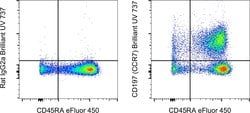
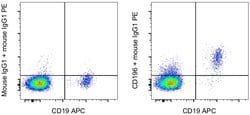
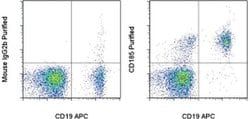
- The 3D12 MAb reacts with human CCR7, also known as EBI-1 and CD197
- CCR7 is a member of the G-protein-coupled chemokine receptor family with seven membrane-spanning domains and functions as a receptor for 6Ckine/SLC (secondary lymphoid-tissue chemokine), CCL19 and CCL21
- CCR7 has been shown to be internalized via clathrin-coated pits and the majority recycled back to the plasma membrane
- CCR7 is expressed on T cells and can be used to distinguish populations of naive from central and effector memory T cells
- CCR7 has been shown to play a role in migration of memory T cells to inflamed tissue
- Expression of CCR7 is also found on DC's
- During DC maturation CCR7 expression increases and is thought to be involved in a variety of functions: chemotaxis to the lymph node, cellular architecture, rate of endocytosis, survival and maturation
- Expression of CCR7 on the cell surface can be down regulated upon ligand binding
- CCR7 is a member of the G protein coupled receptor family, which is a subfamily of chemokines
- CCR7 was identified to be induced by the Epstein Barr virus (EBV), and is thought to be a mediator of EBV effects on B lymphocytes
- CCR7 has been reported to be expressed in blood, bone marrow, lymph node, and intestine
- CCR7 is particularly expressed in lymphoid tissues and in activated B and T lymphocytes and has been shown to control the migration of memory T cells to inflamed tissues, as well as stimulate dendritic cell maturation
- The chemokine (C-C motif) ligand 19 (CCL19/ECL) has been reported to be a specific ligand of this receptor
- ESTs have been isolated from blood, embryo, lymph node, and thymus libraries
- Receptors for the C - C chemokine family include CCR 1, CCR 2A, CCR 3, CCR 4, CCR 5 and the Duffy blood group antigen
- The C-C receptors are important in the function of T cell chemotaxis and migration of phagocytic cells to sites of inflammation.