7226330
FGF23 Polyclonal Antibody, Invitrogen™
Rabbit Polyclonal Antibody
Manufacturer: Fischer Scientific
The price for this product is unavailable. Please request a quote
Antigen
FGF23
Applications
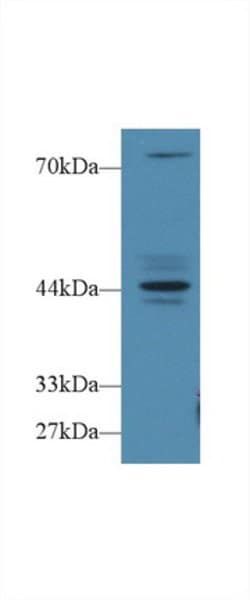
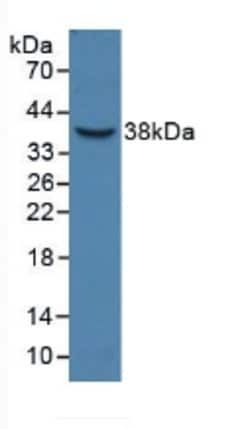
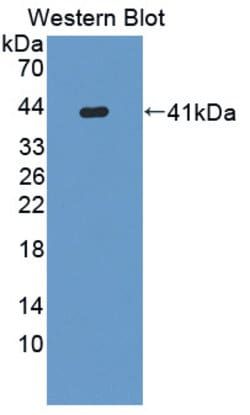
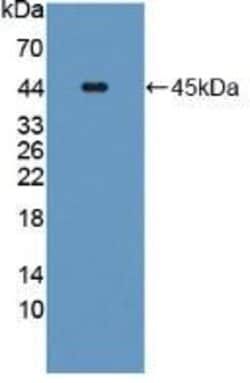
Immunohistochemistry (Paraffin), Western Blot
Conjugate
Unconjugated
Host Species
Rabbit
Target Species
Human
Gene Accession No.
Q9GZV9
Gene ID (Entrez)
8074
Immunogen
Phe157-Gly238 (Accession Q9GZV9)
Primary or Secondary
Primary
Content And Storage
-20°C
Gene
FGF23
Concentration
0.5 mg/mL
Classification
Polyclonal
Form
Liquid
Regulatory Status
RUO
Formulation
PBS with 50% glycerol and 0.05% ProClin 300
Gene Alias
ADHR; FGF; Fgf23; FGF-23; FGFN; Fibroblast growth factor; Fibroblast growth factor 23; Fibroblast growth factor 23 C-terminal peptide; Fibroblast growth factor 23 N-terminal peptide; HPDR2; HYPF; Phosphatonin; PHPTC; tumor-derived hypophosphatemia inducing factor; Tumor-derived hypophosphatemia-inducing factor; UNQ3027/PRO9828
Gene Symbols
FGF23
Isotype
IgG
Purification Method
Antigen affinity chromatography
Product Type
Antibody
Related Products

Description
- The protein encoded by this gene is a member of the fibroblast growth factor family
- FGF family members possess broad mitogenic and cell survival activities and are involved in a variety of biological processes including embryonic development, cell growth, morphogenesis, tissue repair, tumor growth and invasion
- The product of this gene inhibits renal tubular phosphate transport
- This gene was identified by its mutations associated with autosomal dominant hypophosphatemic rickets, an inherited phosphate wasting disorder
- Abnormally high level expression of this gene was found in oncogenic hypophosphatemic osteomalacia, a phenotypically similar disease caused by abnormal phosphate metabolism
- Mutations in this gene have also been shown to cause familial tumoral calcinosis with hyperphosphatemia.