7228584
Ly-6G Monoclonal Antibody (1A8-Ly6g), Brilliant Ultra Violet™ 395, eBioscience™, Invitrogen™
Rat Monoclonal Antibody
Manufacturer: Fischer Scientific
The price for this product is unavailable. Please request a quote
Antigen
Ly-6G
Concentration
0.2 mg/mL
Classification
Monoclonal
Form
Liquid
Regulatory Status
RUO
Formulation
PBS with BSA and 0.09% sodium azide; pH 7.2
Gene Alias
Gr1; Gr-1; Ly6g; Ly-6G; ly-6G.1; lymphocyte antigen 6 complex, locus G; lymphocyte antigen 6G
Gene Symbols
Ly6g
Primary or Secondary
Primary
Content And Storage
4° C, store in dark, DO NOT FREEZE!
Gene
Ly6g
Clone
1A8-Ly6g
Applications
Flow Cytometry
Conjugate
Brilliant Ultraviolet 395
Host Species
Rat
Target Species
Mouse
Gene Accession No.
P35461
Gene ID (Entrez)
546644
Isotype
IgG2a κ
Purification Method
Affinity chromatography
Product Type
Antibody
Related Products


Description
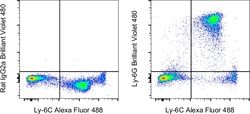
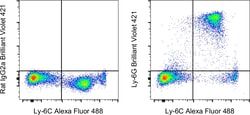
- Ly6G (Lymphocyte antigen 6 complex locus G6D) is a component of the myeloid differentiation antigen Gr-1, together with Ly6C
- The Ly6G protein has a molecular weight of approximately 21-25 kDa and is expressed by myeloid derived cells in the bone marrow
- Ly6G is a good marker for detection of peripheral neutrophils, monocytes and granulocytes
- Expression of Gr-1 in bone marrow correlates with granulocyte differentiation and maturation
- The physiological role of Ly6G remains unclear but studies have shown its involvement in anti-tumor response, and studies with neutrophils suggest that Ly6G ligation may have an inhibitory effect on local immune responses.