7228659
CD27 Monoclonal Antibody (LG.7F9), Brilliant Violet™ 650, eBioscience™, Invitrogen™
Armenian Hamster Monoclonal Antibody
Manufacturer: Fischer Scientific
The price for this product is unavailable. Please request a quote
Antigen
CD27
Concentration
0.2 mg/mL
Classification
Monoclonal
Form
Liquid
Regulatory Status
RUO
Formulation
PBS with BSA and 0.09% sodium azide; pH 7.2
Gene Alias
CD antigen 27; CD27; CD27 antigen; CD27 molecule; CD27L receptor; LPFS2; S152; S152. LPFS2; sCD27; soluble CD27; T cell activation antigen S152; T14; T-cell activation antigen CD27; TNFRSF7; TNFSF7; Tp55; Tumor necrosis factor receptor superfamily member 7; tumor necrosis factor receptor superfamily, member 7
Gene Symbols
CD27
Primary or Secondary
Primary
Content And Storage
4° C, store in dark, DO NOT FREEZE!
Gene
CD27
Clone
LG.7F9
Applications
Flow Cytometry
Conjugate
Brilliant Violet 650
Host Species
Armenian Hamster
Target Species
Human, Mouse, Rat
Gene Accession No.
P26842, P41272
Gene ID (Entrez)
21940, 500318, 939
Isotype
IgG
Purification Method
Affinity chromatography
Product Type
Antibody
Related Products
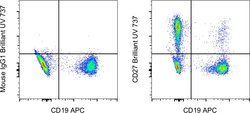
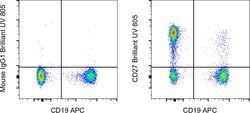
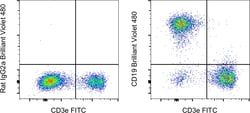
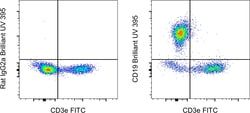
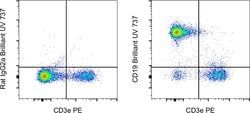
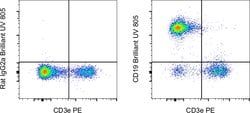
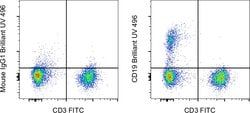
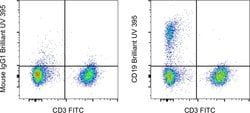
Description
- CD27 is a 50 kDa member of the tumor necrosis factor (TNF) receptor superfamily that includes CD40 and CD30
- The TNF superfamily members are known for the regulation of cell proliferation and death
- In contrast to the expression of other TNFR/TNF family members, expression of CD27 and its ligand CD70 is predominantly confined to lymphocytes
- High expression levels of CD27 appear to be dependent on proper ligation of antigen receptors
- CD70 expression requires additional co-stimulatory and/or pro-inflammatory signals
- CD27 is expressed as a disulfide-linked homodimer on mature thymocytes, peripheral blood T cells and a subpopulation of B cells
- Activation of T cells via TCR-CD3 complex results in upregulation of CD27 expression on the plasma membrane as well as in the release of its soluble 28-32 kDa form, sCD27, detected in the plasma, urine or spinal fluid
- Soluble CD27 is an important prognostic marker of acute and chronic B cell malignancies
- RgpA, a cystein proteinase, although activating T cells through the protease-activated receptors (PARs), degradates CD27 and counteracts T cell activation mediated by CD27 and its ligand CD70
- CD27-binding protein (SIVA), a proapoptotic protein, can bind to this receptor and is thought to play an important role in the apoptosis induced by this receptor
- Diseases associated with CD27 dysfunction include Lymphoproliferative Syndrome 2 and Autosomal Recessive Lymphoproliferative Syndrome.