7240938
PGRP-S Polyclonal Antibody, Invitrogen™
Rabbit Polyclonal Antibody
Manufacturer: Fischer Scientific
The price for this product is unavailable. Please request a quote
Antigen
PGRP-S
Applications
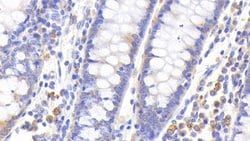
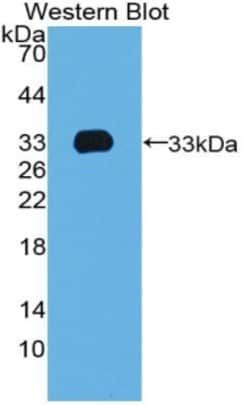
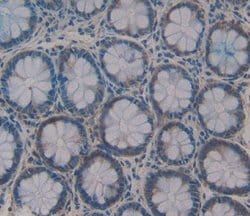
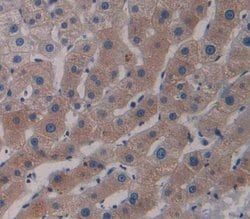
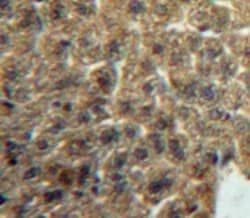
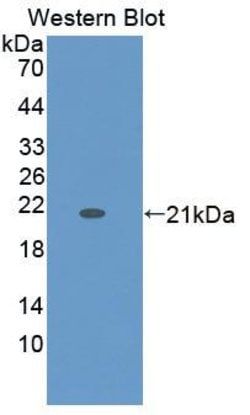
Immunohistochemistry (Paraffin), Western Blot
Conjugate
Unconjugated
Host Species
Rabbit
Target Species
Human
Gene Accession No.
O75594
Gene ID (Entrez)
8993
Immunogen
Gln22-Pro196 (Accession O75594), with N-terminal His Tag
Primary or Secondary
Primary
Content And Storage
-20°C
Gene
PGLYRP1
Concentration
0.95 mg/mL
Classification
Polyclonal
Form
Liquid
Regulatory Status
RUO
Formulation
PBS with 50% glycerol and 0.05% ProClin 300
Gene Alias
Cytokine tag7; MGC126894; MGC126896; peptidoglycan recognition protein 1; Peptidoglycan recognition protein short; Pglyrp; Pglyrp1; PGRP; PGRPS; PGRP-S; SBBI68; Tag7; Tasg7; TNF superfamily, member 3 (LTB)-like (peptidoglycan recognition protein); TNFSF3L; UNQ639/PRO1269
Gene Symbols
PGLYRP1
Isotype
IgG
Purification Method
Antigen affinity chromatography
Product Type
Antibody
Related Products
Description
- The primary immune recognition is based on structures common among invading pathogens
- Bacterial surface molecules, such as lipopolysaccharide (LPS) and peptidoglycan (PGN), are known to elicit immune reactions ranging from cytokine release to fever
- Recently, a family of proteins called peptidoglycan recognition protein (PGRP) has been identified in mouse and human that binds to peptidoglycans expressed on Gram-positive bacteria
- Peptidoglycan (PGN) is an essential cell wall component of virtually all bacteria (1,2) and, thus, it is an excellent target for recognition by the eukaryotic innate immune system
- The PGRPs (PGRP-L, PGRP-S, PGRP-Ia, and PGRP-Ib) define a new family of human pattern recognition molecules (3)
- PGRP-L is primarily expressed in the liver
- Although liver is not considered a primary immune organ, liver participates in host defenses by producing acute phase proteins (by hepatocytes) in response to infections and by clearing microorganisms from blood (4)
- PGRP-S is present in neutrophils and inhibits growth of Gram-positive bacteria and, therefore, may function as a neutrophil antibacterial protein (5)
- However, PGRP-S may have another, as yet unidentified function because in humans it is expressed in the bone marrow 50-100 times higher than in neutrophils.