89-000-792
male germ cell-associated kinase, Mouse, Clone: 3E5, Abnova™
Manufacturer: Abnova Corporation
Select a Size
| Pack Size | SKU | Availability | Price |
|---|---|---|---|
| Each of 1 | 89-000-792-Each-of-1 | In Stock | ₹ 42,898.00 |
89-000-792 - Each of 1
In Stock
Quantity
1
Base Price: ₹ 42,898.00
GST (18%): ₹ 7,721.64
Total Price: ₹ 50,619.64
Antigen
male germ cell-associated kinase
Classification
Monoclonal
Conjugate
Unconjugated
Formulation
PBS with no preservative; pH 7.4
Gene Accession No.
BC039825
Gene Symbols
MAK
Immunogen
MAK (AAH39825, 358 a.a. ∼ 457 a.a) partial recombinant protein with GST tag. MW of the GST tag alone is 26 KDa.
Quantity
100 μg
Research Discipline
Kinases
Primary or Secondary
Primary
Target Species
Human, Mouse, Rat
Product Type
Antibody
Applications
ELISA, Immunofluorescence, Western Blot
Clone
3E5
Description
Mouse monoclonal antibody raised against a partial recombinant MAK.
Gene
MAK
Gene Alias
dJ417M14.2
Host Species
Mouse
Purification Method
Affinity Purified
Regulatory Status
RUO
Whole Molecule
Yes
Gene ID (Entrez)
4117
Content And Storage
Store at -20°C or lower. Aliquot to avoid repeated freezing and thawing.
Isotype
IgG2a κ
Related Products
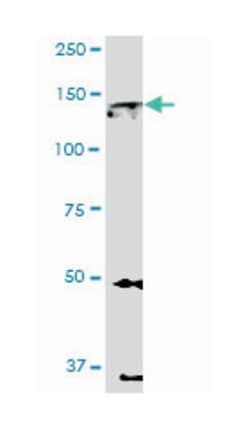
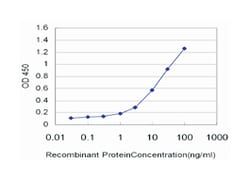
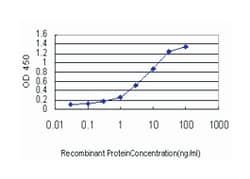
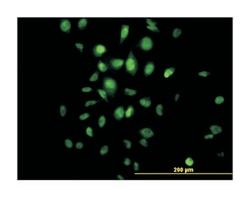
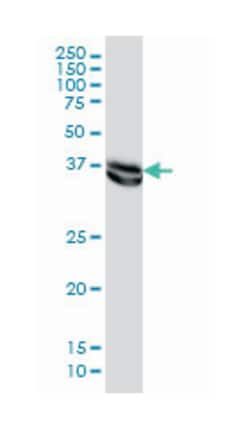
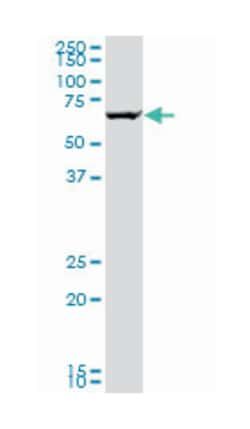
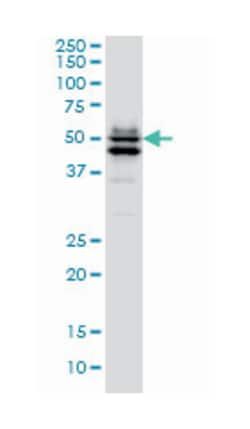
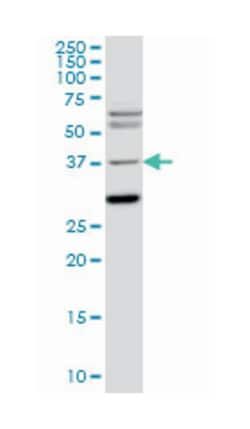
Description
- The product of this gene is a serine/threonine protein kinase related to kinases involved in cell cycle regulation
- It is expressed almost exclusively in the testis, primarily in germ cells
- Studies of the mouse and rat homologs have localized the kinase to the chromosomes during meiosis in spermatogenesis, specifically to the synaptonemal complex that exists while homologous chromosomes are paired
- There is, however, a study of the mouse homolog that has identified high levels of expression in developing sensory epithelia so its function may be more generalized
- [provided by RefSeq Sequence: PPKQQSQEKPPQTLFPSIVKNMPTKPNGTLSHKSGRRRWGQTIFKSGDSWEELEDYDFGASHSKKPSMGVFKEKRKKDSPFRQQVKMAVISLSAHQFPTL