89-005-192
cystatin B (stefin B) (B01), Mouse anti-Human, Polyclonal Antibody, Abnova™
Manufacturer: Abnova Corporation
Select a Size
| Pack Size | SKU | Availability | Price |
|---|---|---|---|
| Each of 1 | 89-005-192-Each-of-1 | In Stock | ₹ 42,898.00 |
89-005-192 - Each of 1
In Stock
Quantity
1
Base Price: ₹ 42,898.00
GST (18%): ₹ 7,721.64
Total Price: ₹ 50,619.64
Antigen
cystatin B (stefin B)
Classification
Polyclonal
Description
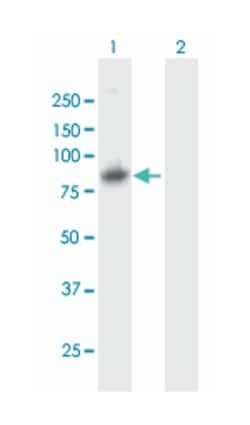
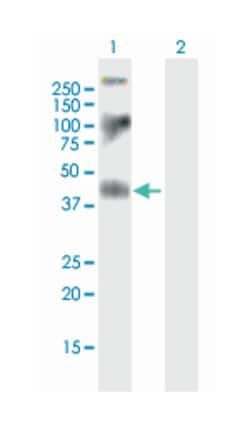
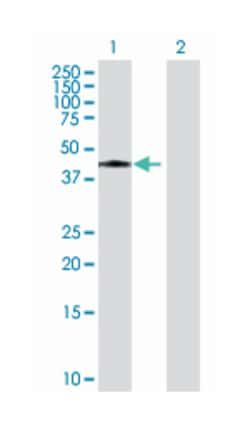
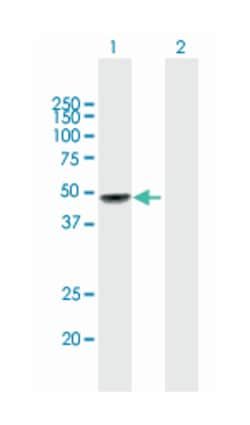
Mouse polyclonal antibody raised against a full-length human CSTB protein.
Gene
CSTB
Gene Alias
CST6/EPM1/PME/STFB
Host Species
Mouse
Quantity
50 μL
Whole Molecule
Yes
Gene ID (Entrez)
1476
Content And Storage
Store at -20°C or lower. Aliquot to avoid repeated freezing and thawing.
Applications
Western Blot
Conjugate
Unconjugated
Formulation
No additive
Gene Accession No.
BC003370
Gene Symbols
CSTB
Immunogen
CSTB (AAH03370.1, 1 a.a. ∼ 98 a.a) full-length human protein.
Regulatory Status
RUO
Primary or Secondary
Primary
Target Species
Human
Form
Serum
Related Products


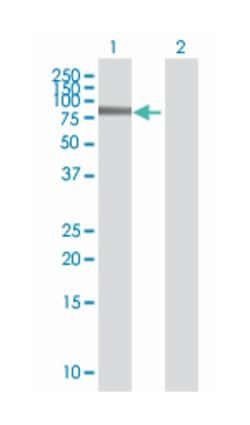
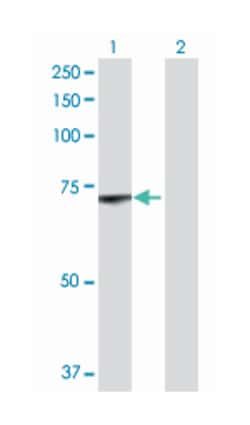
Description
- The cystatin superfamily encompasses proteins that contain multiple cystatin-like sequences
- Some of the members are active cysteine protease inhibitors, while others have lost or perhaps never acquired this inhibitory activity
- There are three inhibitory families in the superfamily, including the type 1 cystatins (stefins), type 2 cystatins and kininogens
- This gene encodes a stefin that functions as an intracellular thiol protease inhibitor
- The protein is able to form a dimer stabilized by noncovalent forces, inhibiting papain and cathepsins l, h and b
- The protein is thought to play a role in protecting against the proteases leaking from lysosomes
- Evidence indicates that mutations in this gene are responsible for the primary defects in patients with progressive myoclonic epilepsy (EPM1)
- [provided by RefSeq Sequence: MMCGAPSATQPATAETQHIADQVRSQLEEKENKKFPVFKAVSFKSQVVAGTNYFIKVHVGDEDFVHLRVFQSLPHENKPLTLSNYQTNKAKHDELTYF