89-005-604
interferon, gamma, Mouse, Polyclonal Antibody, Abnova™
Manufacturer: Abnova Corporation
Select a Size
| Pack Size | SKU | Availability | Price |
|---|---|---|---|
| Each of 1 | 89-005-604-Each-of-1 | In Stock | ₹ 42,898.00 |
89-005-604 - Each of 1
In Stock
Quantity
1
Base Price: ₹ 42,898.00
GST (18%): ₹ 7,721.64
Total Price: ₹ 50,619.64
Antigen
interferon, gamma
Classification
Polyclonal
Description
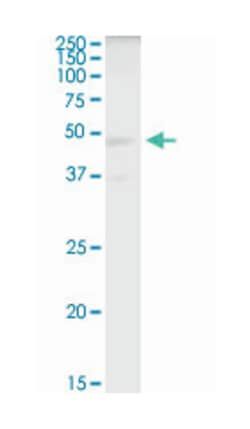
Mouse polyclonal antibody raised against a full-length human IFNG protein.
Gene
IFNG
Gene Alias
IFG/IFI
Host Species
Mouse
Quantity
50 μL
Research Discipline
Cytokines
Primary or Secondary
Primary
Target Species
Human
Form
Serum
Applications
Western Blot
Conjugate
Unconjugated
Formulation
No additive
Gene Accession No.
NM_000619
Gene Symbols
IFNG
Immunogen
IFNG (NP_000610, 1 a.a. ∼ 166 a.a) full-length human protein.
Regulatory Status
RUO
Whole Molecule
Yes
Gene ID (Entrez)
3458
Content And Storage
Store at -20°C or lower. Aliquot to avoid repeated freezing and thawing.
Related Products
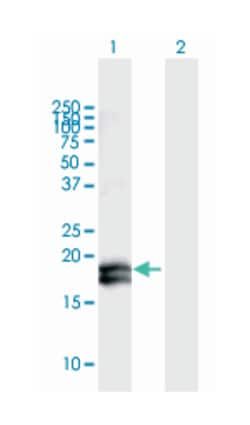
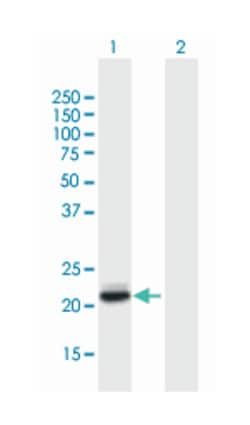
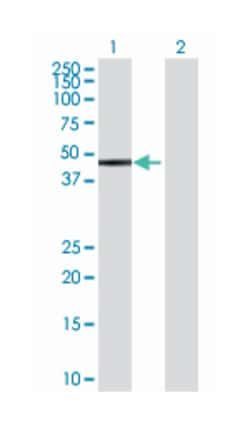
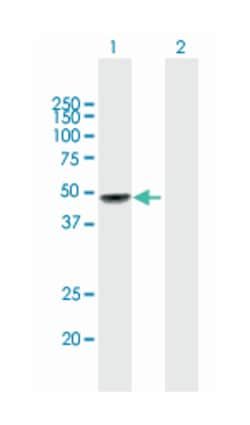



Description
- Interferon-gamma (IFNG), or type II interferon, is a cytokine critical for innate and adaptive immunity against viral and intracellular bacterial infections and for tumor control
- Aberrant IFNG expression is associated with a number of autoinflammatory and autoimmune diseases
- The importance of IFNG in the immune system stems in part from its ability to inhibit viral replication directly, but most importantly derives from its immunostimulatory and immunomodulatory effects
- IFNG is produced predominantly by natural killer (NK) and natural killer T (NKT) cells as part of the innate immune response, and by CD4 (MIM 186940) and CD8 (see MIM 186910) cytotoxic T lymphocyte (CTL) effector T cells once antigen-specific immunity develops (Schoenborn and Wilson, 2007 [PubMed 17981204]).[supplied by OMIM Sequence: MKYTSYILAFQLCIVLGSLGCYCQDPYVKEAENLKKYFNAGHSDVADNGTLFLGILKNWKEESDRKIMQSQIVSFYFKLFKNFKDDQSIQKSVETIKEDMNVKFFNSNKKKRDDFEKLTNYSVTDLNVQRKAIHELIQVMAELSPAAKTGKRKRSQMLFQGRRASQ