89-016-747
septin 7, Mouse, Purified MaxPab™ Polyclonal Antibody, Abnova™
Manufacturer: Abnova Corporation
Select a Size
| Pack Size | SKU | Availability | Price |
|---|---|---|---|
| Each of 1 | 89-016-747-Each-of-1 | In Stock | ₹ 46,458.00 |
89-016-747 - Each of 1
In Stock
Quantity
1
Base Price: ₹ 46,458.00
GST (18%): ₹ 8,362.44
Total Price: ₹ 54,820.44
Antigen
Septin-7
Classification
Polyclonal
Description
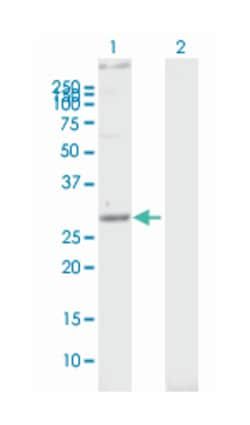
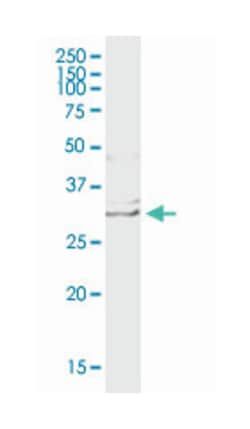
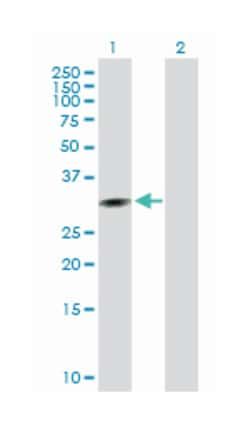
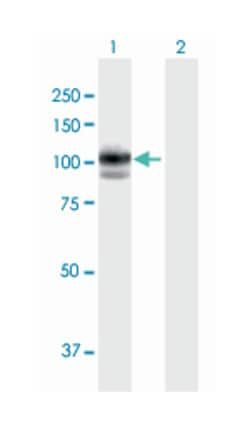
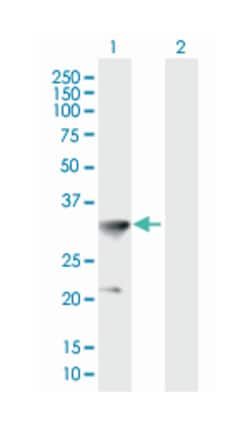
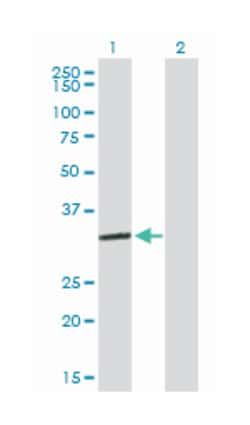
Mouse polyclonal antibody raised against a full-length human SEPT7 protein.
Gene
SEPT7
Gene Alias
CDC10/CDC3/Nbla02942/SEPT7A
Host Species
Mouse
Purification Method
Affinity Purified
Regulatory Status
RUO
Primary or Secondary
Primary
Target Species
Human
Product Type
Antibody
Applications
Western Blot
Conjugate
Unconjugated
Formulation
PBS with no preservative; pH 7.4
Gene Accession No.
NM_001788
Gene Symbols
SEPT7
Immunogen
SEPT7 (NP_001779, 1 a.a. ∼ 418 a.a) full-length human protein.
Quantity
50 μg
Research Discipline
Cell Cycle
Gene ID (Entrez)
989
Content And Storage
Store at -20°C or lower. Aliquot to avoid repeated freezing and thawing.
Isotype
IgG
Related Products


Description
- This gene encodes a protein that is highly similar to the CDC10 protein of Saccharomyces cerevisiae
- The protein also shares similarity with Diff 6 of Drosophila and with H5 of mouse
- Each of these similar proteins, including the yeast CDC10, contains a GTP-binding motif
- The yeast CDC10 protein is a structural component of the 10nm filament which lies inside the cytoplasmic membrane and is essential for cytokinesis
- Although the exact function of this gene has not yet been determined, its high similarity to yeast CDC10 and the high conservative nature of eukaryotic cell cycle machinery suggest a similar role to that of its yeast counterpart
- Alternative splicing results in two transcript variants encoding different isoforms
- [provided by RefSeq Sequence: MVAQQKNLEGYVGFANLPNQVYRKSVKRGFEFTLMVVGESGLGKSTLINSLFLTDLYSPEYPGPSHRIKKTVQVEQSKVLIKEGGVQLLLTIVDTPGFGDAVDNSNCWQPVIDYIDSKFEDYLNAESRVNRRQMPDNRVQCCLYFIAPSGHGLKPLDIEFMKRLHEKVNIIPLIAKADTLTPEECQQFKKQIMKEIQEHKIKIYEFPETDDEEENKLVKKIKDRLPLAVVGSNTIIEVNGKRVRGRQYPWGVAEVENGEHCDFTILRNMLIRTHMQDLKDVTNNVHYENYRSRKLAAVTYNGVDNNKNKGQLTKSPLAQMEEERREHVAKMKKMEMEMEQVFEMKVKEKVQKLKDSEAELQRRHEQMKKNLEAQHKELEEKRRQFEDEKANWEAQQRILEQQNSSRTLEKNKKKGKIF