89-018-885
glucokinase (hexokinase 4), Mouse, Purified MaxPab™ Polyclonal Antibody, Abnova™
Manufacturer: Abnova Corporation
Select a Size
| Pack Size | SKU | Availability | Price |
|---|---|---|---|
| Each of 1 | 89-018-885-Each-of-1 | In Stock | ₹ 45,657.00 |
89-018-885 - Each of 1
In Stock
Quantity
1
Base Price: ₹ 45,657.00
GST (18%): ₹ 8,218.26
Total Price: ₹ 53,875.26
Antigen
glucokinase (hexokinase 4)
Classification
Polyclonal
Description
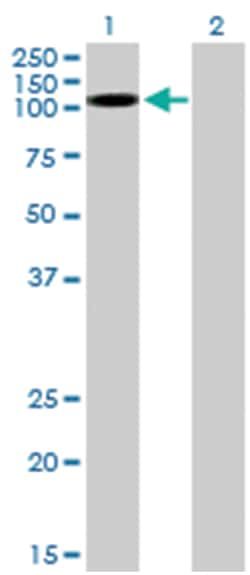
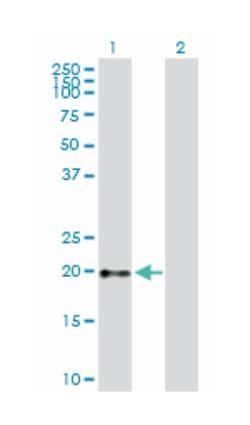
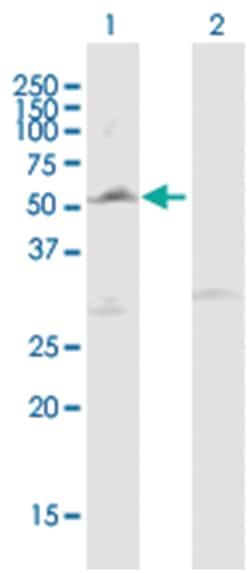
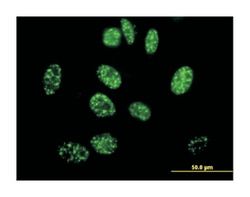
Mouse polyclonal antibody raised against a full-length human GCK protein.
Gene
GCK
Gene Alias
GK/GLK/HHF3/HK4/HKIV/HXKP/MODY2
Host Species
Mouse
Purification Method
Affinity Purified
Regulatory Status
RUO
Primary or Secondary
Primary
Target Species
Human
Product Type
Antibody
Applications
Immunofluorescence, Western Blot
Conjugate
Unconjugated
Formulation
PBS with no preservative; pH 7.4
Gene Accession No.
BC001890.1
Gene Symbols
GCK
Immunogen
GCK (AAH01890.1, 1 a.a. ∼ 465 a.a) full-length human protein.
Quantity
50 μg
Research Discipline
Kinases
Gene ID (Entrez)
2645
Content And Storage
Store at -20°C or lower. Aliquot to avoid repeated freezing and thawing.
Isotype
IgG
Related Products



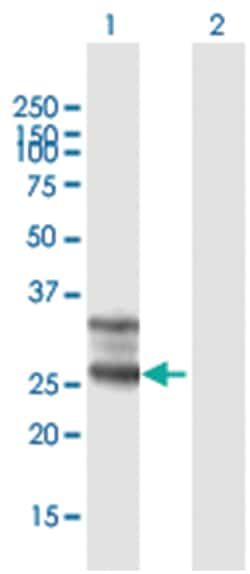
Description
- Hexokinases phosphorylate glucose to produce glucose-6-phosphate, the first step in most glucose metabolism pathways
- Alternative splicing of this gene results in three tissue-specific forms of glucokinase, one found in pancreatic islet beta cells and two found in liver
- The protein localizes to the outer membrane of mitochondria
- In contrast to other forms of hexokinase, this enzyme is not inhibited by its product glucose-6-phosphate but remains active while glucose is abundant
- Mutations in this gene have been associated with noninsulin dependent diabetes mellitus (NIDDM), maturity onset diabetes of the young, type 2 (MODY2) and persistent hyperinsulinemic hypoglycemia of infancy (PHHI)
- [provided by RefSeq Sequence: MLDDRARMEAAKKEKVEQILAEFQLQEEDLKKVMRRMQKEMDRGLRLETHEEASVKMLPTYVRSTPEGSEVGDFLSLDLGGTNFRVMLVKVGEGEEGQWSVKTKHQMYSIPEDAMTGTAEMLFDYISECISDFLDKHQMKHKKLPLGFTFSFPVRHEDIDKGILLNWTKGFKASGAEGNNVVGLLRDAIKRRGDFEMDVVAMVNDTVATMISCYYEDHQCEVGMIVGTGCNACYMEEMQNVELVEGDEGRMCVNTEWGAFGDSGELDEFLLEYDRLVDESSANPGQQLYEKLIGGKYMGELVRLVLLRLVDENLLFHGEASEQLRTRGAFETRFVSQVESDTGDRKQIYNILSTLGLRPSTTDCDIVRRACESVSTRAAHMCSAGLAGVINRMRESRSEDVMRITVGVDGSVYKLHPSFKERFHASVRRLTPSCEITFIESEEGSGRGAALVSAVACKKACMLGQ