GREM1 (C-terminus), Rabbit, Polyclonal Antibody, Abnova™
Manufacturer: Abnova Corporation
Select a Size
| Pack Size | SKU | Availability | Price |
|---|---|---|---|
| Each of 1 | 89-024-842-Each-of-1 | In Stock | ₹ 55,981.00 |
89-024-842 - Each of 1
In Stock
Quantity
1
Base Price: ₹ 55,981.00
GST (18%): ₹ 10,076.58
Total Price: ₹ 66,057.58
Antigen
GREM1 Ab-1
Classification
Polyclonal
Description
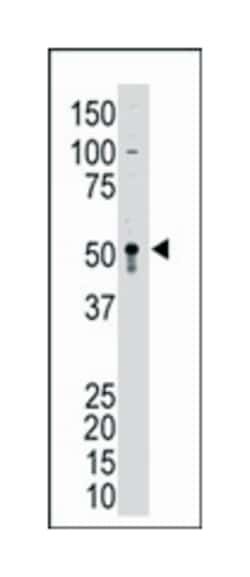
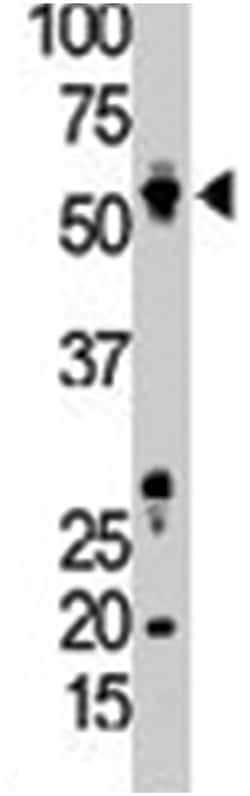
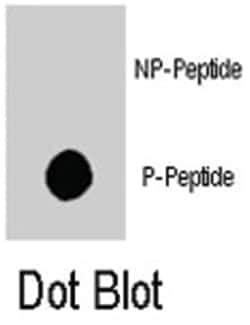
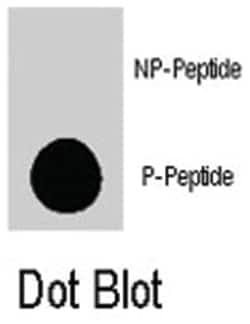
Rabbit polyclonal antibody raised against synthetic peptide of GREM1.
Formulation
In PBS (0.09% sodium azide)
Gene Alias
CKTSF1B1/DAND2/DRM/GREMLIN/IHG-2/MGC126660/PIG2
Host Species
Rabbit
Quantity
400 μL
Primary or Secondary
Primary
Target Species
Human, Mouse
Form
Liquid
Applications
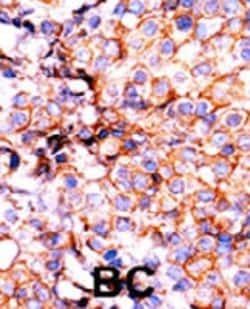
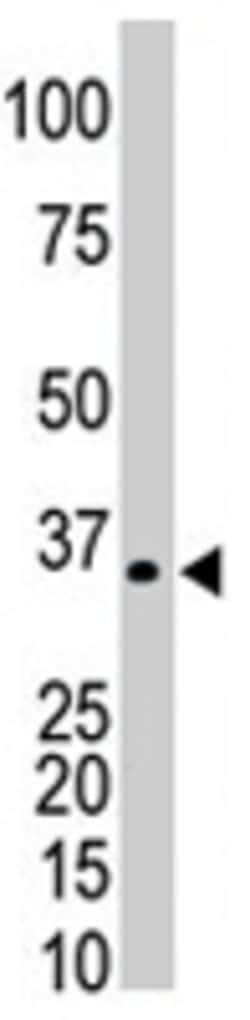
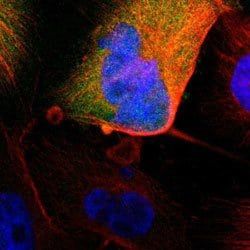
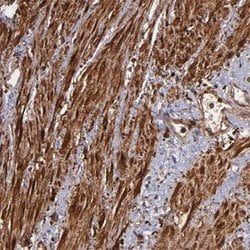
ELISA, Immunohistochemistry, Immunohistochemistry (PFA fixed), Western Blot
Conjugate
Unconjugated
Dilution
ELISA (1:1000) Western Blot (1:100-500) Immunohistochemistry (1:50-100) The optimal working dilution should be determined by the end user.
Gene
GREM1
Gene Symbols
GREM1
Immunogen
A synthetic peptide (conjugated with KLH) corresponding to C-terminus of human GREM1.
Regulatory Status
RUO
Gene ID (Entrez)
26585
Content And Storage
Store at 4°C. For long term storage store at -20°C.Aliquot to avoid repeated freezing and thawing.
Related Products
Description
- This gene encodes a member of the BMP (bone morphogenic protein) antagonist family
- Like BMPs, BMP antagonists contain cystine knots and typically form homo- and heterodimers
- The CAN (cerberus and dan) subfamily of BMP antagonists, to which this gene belongs, is characterized by a C-terminal cystine knot with an eight-membered ring
- The antagonistic effect of the secreted glycosylated protein encoded by this gene is likely due to its direct binding to BMP proteins
- As an antagonist of BMP, this gene may play a role in regulating organogenesis, body patterning, and tissue differentiation
- In mouse, this protein has been shown to relay the sonic hedgehog (SHH) signal from the polarizing region to the apical ectodermal ridge during limb bud outgrowth
- [provided by RefSeq