89-104-483
FGF9, Mouse, Polyclonal Antibody, Abnova™
Manufacturer: Abnova Corporation
Select a Size
| Pack Size | SKU | Availability | Price |
|---|---|---|---|
| Each of 1 | 89-104-483-Each-of-1 | In Stock | ₹ 30,794.00 |
89-104-483 - Each of 1
In Stock
Quantity
1
Base Price: ₹ 30,794.00
GST (18%): ₹ 5,542.92
Total Price: ₹ 36,336.92
Antigen
FGF9
Classification
Polyclonal
Description
Mouse polyclonal antibody raised against a partial recombinant FGF9.
Gene
FGF9
Gene Alias
GAF/HBFG-9/MGC119914/MGC119915
Host Species
Mouse
Quantity
50 μL
Primary or Secondary
Primary
Target Species
Human
Form
Antisera
Applications
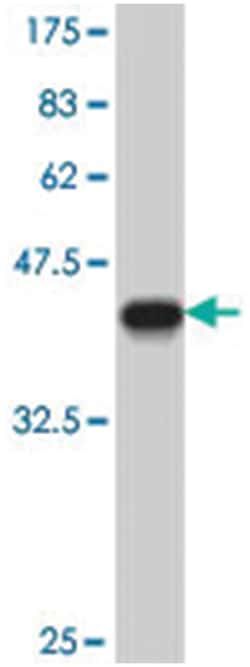
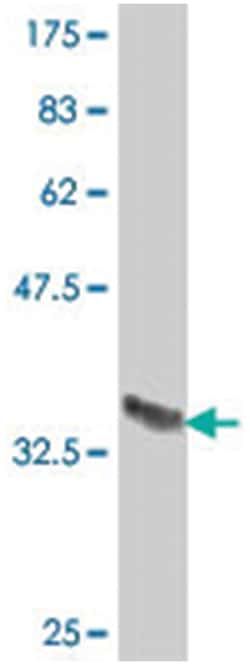
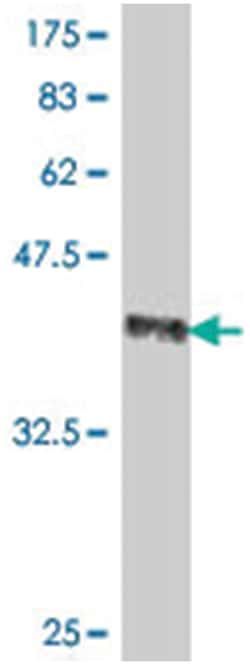
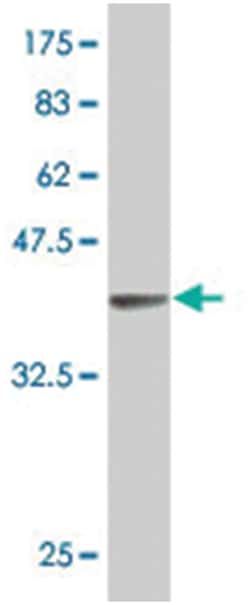
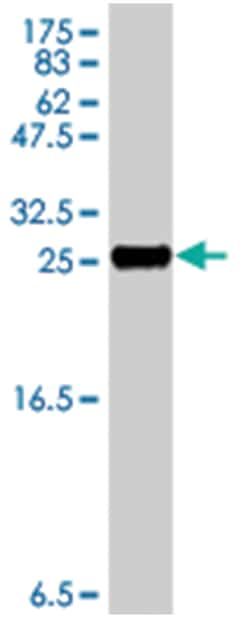
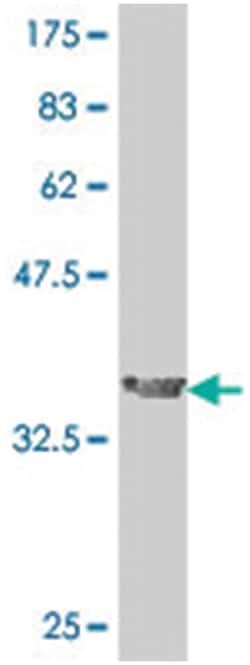
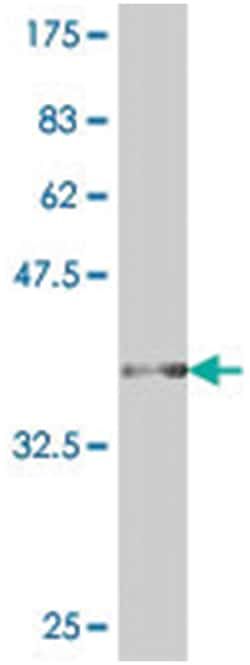
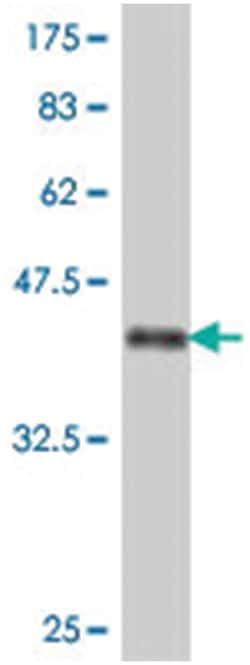
ELISA, Western Blot
Conjugate
Unconjugated
Formulation
50% glycerol
Gene Accession No.
NM_002010
Gene Symbols
FGF9
Immunogen
FGF9 (NP_002001, 99 a.a. to 208 a.a) partial recombinant protein with GST tag.
Regulatory Status
RUO
Gene ID (Entrez)
2254
Content And Storage
Store at -20°C or lower. Aliquot to avoid repeated freezing and thawing.
Related Products
Description
- The protein encoded by this gene is a member of the fibroblast growth factor (FGF) family
- FGF family members possess broad mitogenic and cell survival activities, and are involved in a variety of biological processes, including embryonic development, cell growth, morphogenesis, tissue repair, tumor growth and invasion
- This protein was isolated as a secreted factor that exhibits a growth-stimulating effect on cultured glial cells
- In nervous system, this protein is produced mainly by neurons and may be important for glial cell development
- Expression of the mouse homolog of this gene was found to be dependent on Sonic hedgehog (Shh) signaling
- Mice lacking the homolog gene displayed a male-to-female sex reversal phenotype, which suggested a role in testicular embryogenesis
- [provided by RefSeq Sequence: SIAVGLVSIRGVDSGLYLGMNEKGELYGSEKLTQECVFREQFEENWYNTYSSNLYKHVDTGRRYYVALNKDGTPREGTRTKRHQKFTHFLPRPVDPDKVPELYKDILSQS