89-104-547
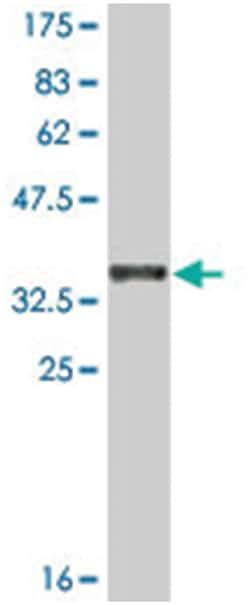
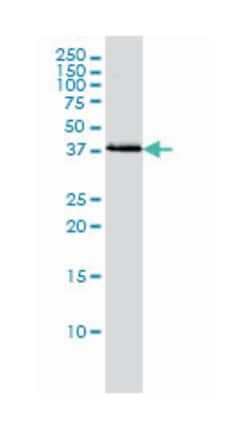
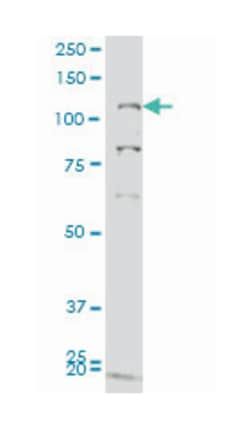
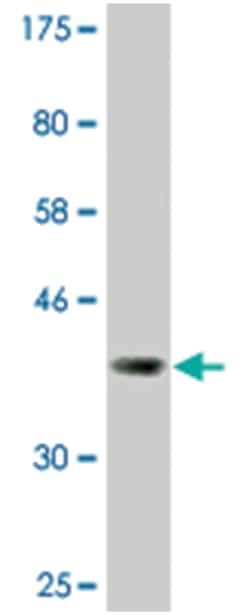
GPC3, Mouse, Clone: 2C12, Abnova™
Manufacturer: Abnova Corporation
Select a Size
| Pack Size | SKU | Availability | Price |
|---|---|---|---|
| Each of 1 | 89-104-547-Each-of-1 | In Stock | ₹ 42,898.00 |
89-104-547 - Each of 1
In Stock
Quantity
1
Base Price: ₹ 42,898.00
GST (18%): ₹ 7,721.64
Total Price: ₹ 50,619.64
Antigen
GPC3
Classification
Monoclonal
Conjugate
Unconjugated
Formulation
ascites with no preservative
Gene Accession No.
NM_004484
Gene Symbols
GPC3
Immunogen
GPC3 (NP_004475.1,121 a.a. ∽ 220 a.a) partial recombinant protein with GST tag. MW of the GST tag alone is 26 KDa.
Regulatory Status
RUO
Gene ID (Entrez)
2719
Content And Storage
Store at -20°C or lower. Aliquot to avoid repeated freezing and thawing.
Form
Ascites
Applications
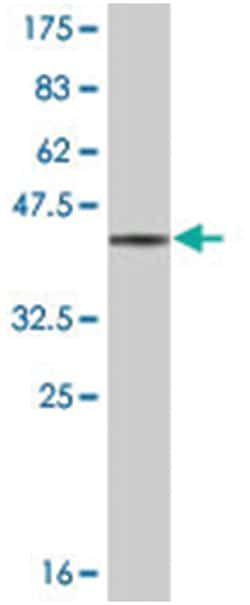
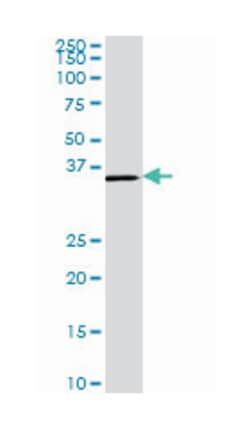
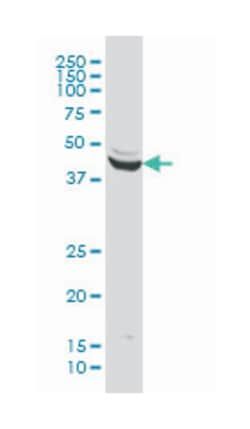
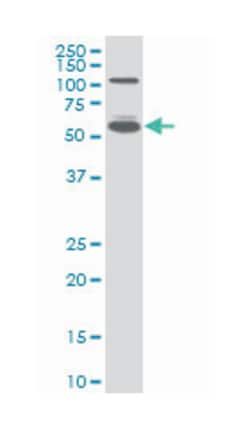
ELISA, Western Blot
Clone
2C12
Description
Mouse monoclonal antibody raised against a partial recombinant GPC3.
Gene
GPC3
Gene Alias
DGSX/OCI-5/SDYS/SGB/SGBS/SGBS1
Host Species
Mouse
Quantity
200 μL
Primary or Secondary
Primary
Target Species
Human
Product Type
Antibody
Isotype
IgM κ
Related Products
Description
- Cell surface heparan sulfate proteoglycans are composed of a membrane-associated protein core substituted with a variable number of heparan sulfate chains
- Members of the glypican-related integral membrane proteoglycan family (GRIPS) contain a core protein anchored to the cytoplasmic membrane via a glycosyl phosphatidylinositol linkage
- These proteins may play a role in the control of cell division and growth regulation
- The protein encoded by this gene can bind to and inhibit the dipeptidyl peptidase activity of CD26, and it can induce apoptosis in certain cell types
- Deletion mutations in this gene are associated with Simpson-Golabi-Behmel syndrome, also known as Simpson dysmorphia syndrome
- Alternative splicing results in multiple transcript variants
- [provided by RefSeq Sequence: HAKNYTNAMFKNNYPSLTPQAFEFVGEFFTDVSLYILGSDINVDDMVNELFDSLFPVIYTQLMNPGLPDSALDINECLRGARRDLKVFGNFPKLIMTQVS