DAG1, Mouse, Clone: M117, Abnova™
Manufacturer: Abnova Corporation
Select a Size
| Pack Size | SKU | Availability | Price |
|---|---|---|---|
| Each of 1 | 89-110-384-Each-of-1 | In Stock | ₹ 70,488.00 |
89-110-384 - Each of 1
In Stock
Quantity
1
Base Price: ₹ 70,488.00
GST (18%): ₹ 12,687.84
Total Price: ₹ 83,175.84
Antigen
DAG1
Classification
Monoclonal
Conjugate
Unconjugated
Dilution
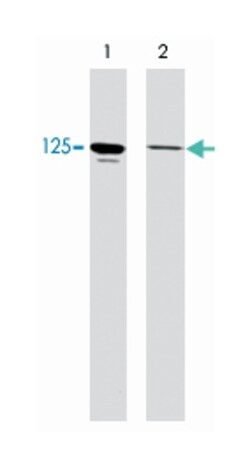
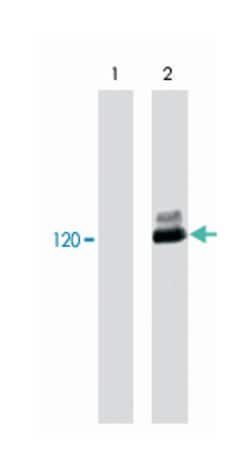
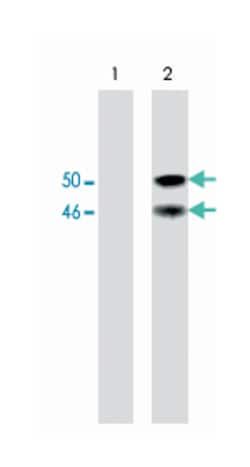
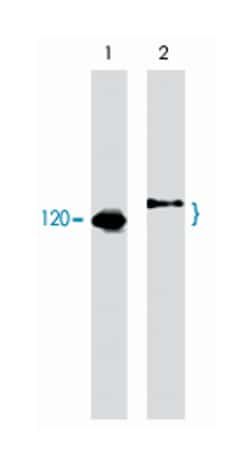
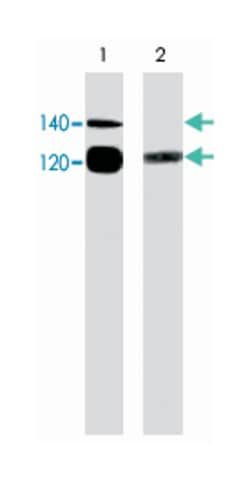
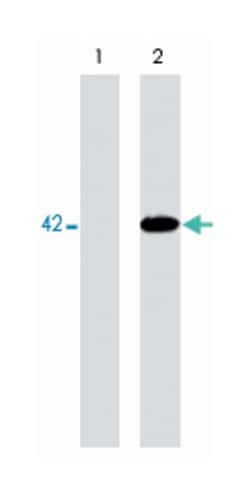
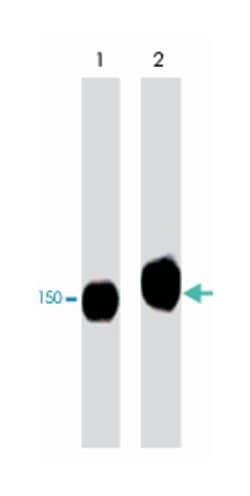
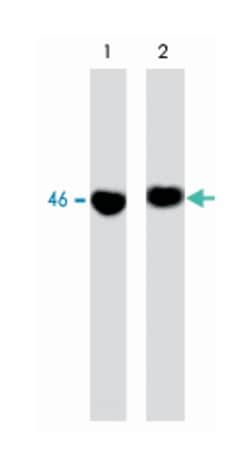
ELISA (1:2000) Western Blot (1:500) The optimal working dilution should be determined by the end user.
Gene
DAG1
Gene Symbols
DAG1
Immunogen
Synthetic phosphopeptide (conjugated with KLH) corresponding to residues surrounding Y892 of human DAG1.
Regulatory Status
RUO
Gene ID (Entrez)
1605
Content And Storage
Store at -20°C.Aliquot to avoid repeated freezing and thawing.
Isotype
IgG1
Applications
ELISA, Western Blot
Clone
M117
Description
Mouse monoclonal antibody raised against synthetic phosphopeptide of DAG1.
Formulation
In PBS (50% glycerol, 1mg/mL BSA, 0.05% sodium azide)
Gene Alias
156DAG/A3a/AGRNR/DAG
Host Species
Mouse
Quantity
100 μL
Primary or Secondary
Primary
Test Specificity
This peptide sequence has high homology to the conserved tyrosine site in rat and mouse dystroglycan.
Form
Liquid
Related Products
Description
- Dystroglycan is a laminin binding component of the dystrophin-glycoprotein complex which provides a linkage between the subsarcolemmal cytoskeleton and the extracellular matrix
- Dystroglycan 1 is a candidate gene for the site of the mutation in autosomal recessive muscular dystrophies
- The dramatic reduction of dystroglycan 1 in Duchenne muscular dystrophy leads to a loss of linkage between the sarcolemma and extracellular matrix, rendering muscle fibers more susceptible to necrosis
- Dystroglycan also functions as dual receptor for agrin and laminin-2 in the Schwann cell membrane
- The muscle and nonmuscle isoforms of dystroglycan differ by carbohydrate moieties but not protein sequence
- Alternative splicing results in multiple transcript variants