89-110-723
MMP9, Mouse, Clone: 2C3, Abnova™
Manufacturer: Abnova Corporation
Select a Size
| Pack Size | SKU | Availability | Price |
|---|---|---|---|
| Each of 1 | 89-110-723-Each-of-1 | In Stock | ₹ 76,718.00 |
89-110-723 - Each of 1
In Stock
Quantity
1
Base Price: ₹ 76,718.00
GST (18%): ₹ 13,809.24
Total Price: ₹ 90,527.24
Antigen
MMP9
Classification
Monoclonal
Conjugate
Unconjugated
Dilution
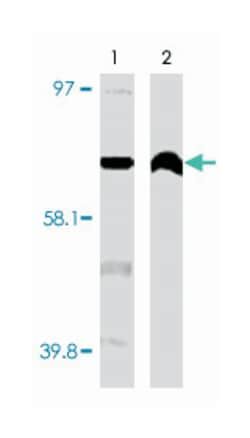
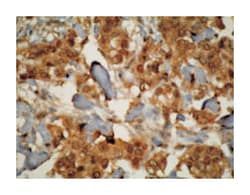
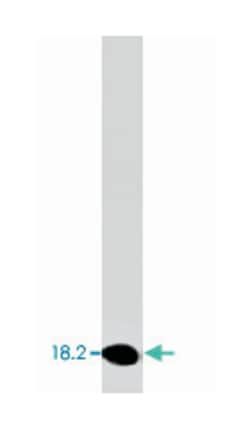
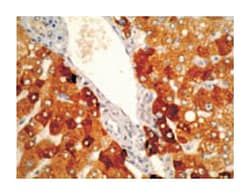
Western blot (1 to 2 ug/mL) Immunohistochemistry on formalin to fixed/paraffin to embedded tissues (1 to 5 ug/mL) The optimal working dilution should be determined by the end user.
Gene
MMP9
Gene Symbols
MMP9
Immunogen
A synthetic peptide corresponding to C-terminus of human MMP9.
Regulatory Status
RUO
Gene ID (Entrez)
4318
Form
Liquid
Applications
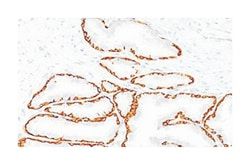
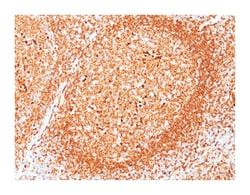
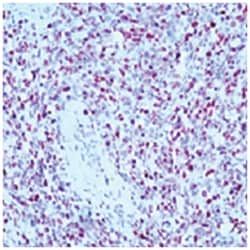
Immunohistochemistry, Western Blot
Clone
2C3
Description
Mouse monoclonal antibody raised against synthetic peptide of MMP9.
Formulation
In PBS (0.08% sodium azide)
Gene Alias
CLG4B/GELB/MMP-9
Host Species
Mouse
Quantity
200 μg
Primary or Secondary
Primary
Content And Storage
Store at -20°C.Aliquot to avoid repeated freezing and thawing.
Isotype
IgG1
Related Products

Description
- Proteins of the matrix metalloproteinase (MMP) family are involved in the breakdown of extracellular matrix in normal physiological processes, such as embryonic development, reproduction, and tissue remodeling, as well as in disease processes, such as arthritis and metastasis
- Most MMPs are secreted as inactive proproteins which are activated when cleaved by extracellular proteinases
- The enzyme encoded by this gene degrades type IV and V collagens
- Studies in rhesus monkeys suggest that the enzyme is involved in IL-8-induced mobilization of hematopoietic progenitor cells from bone marrow, and murine studies suggest a role in tumor-associated tissue remodeling
- [provided by RefSeq