89-111-556
PRF1, Mouse, Clone: 5B10, Abnova™
Manufacturer: Abnova Corporation
Select a Size
| Pack Size | SKU | Availability | Price |
|---|---|---|---|
| Each of 1 | 89-111-556-Each-of-1 | In Stock | ₹ 1,90,193.00 |
89-111-556 - Each of 1
In Stock
Quantity
1
Base Price: ₹ 1,90,193.00
GST (18%): ₹ 34,234.74
Total Price: ₹ 2,24,427.74
Antigen
PRF1
Classification
Monoclonal
Conjugate
Unconjugated
Dilution
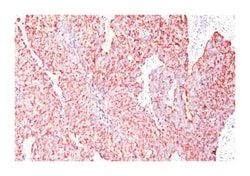
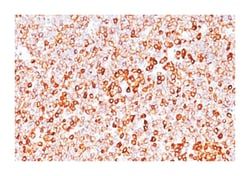
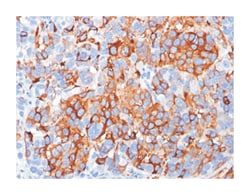
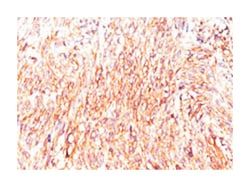
Immunohistochemistry (Formalin/PFA-fixed paraffin-embedded sections) (1:10) The optimal working dilution should be determined by the end user.
Gene
PRF1
Gene Symbols
PRF1
Immunogen
Recombinant protein corresponding to C-terminus of human PRF1.
Regulatory Status
RUO
Gene ID (Entrez)
5551
Content And Storage
Store at 4°C.
Isotype
IgG1
Applications
Immunohistochemistry, Immunohistochemistry (Frozen)
Clone
5B10
Description
Mouse monoclonal antibody raised against partial recombinant PRF1.
Formulation
In tissue culture supernatant (0.09% sodium azide)
Gene Alias
FLH2/HPLH2/MGC65093/P1/PFN1/PFP
Host Species
Mouse
Quantity
500 μL
Primary or Secondary
Primary
Target Species
Human
Form
Liquid
Related Products


Description
- The protein encoded by this gene has structural and functional similarities to complement component 9 (C9)
- Like C9, this protein creates transmembrane tubules and is capable of lysing nonspecifically a variety of target cells
- This protein is one of the main cytolytic proteins of cytolytic granules, and it is known to be a key effector molecule for T-cell- and natural killer-cell-mediated cytolysis
- Defects in this gene cause familial hemophagocytic lymphohistiocytosis type 2 (HPLH2), a rare and lethal autosomal recessive disorder of early childhood
- Alternative splicing results in multiple transcript variants encoding the same protein
- [provided by RefSeq