CD86, Mouse, Clone: BU63, Abnova™
Manufacturer: Abnova Corporation
Select a Size
| Pack Size | SKU | Availability | Price |
|---|---|---|---|
| Each of 1 | 89-111-631-Each-of-1 | In Stock | ₹ 53,133.00 |
89-111-631 - Each of 1
In Stock
Quantity
1
Base Price: ₹ 53,133.00
GST (18%): ₹ 9,563.94
Total Price: ₹ 62,696.94
Antigen
CD86
Classification
Monoclonal
Conjugate
Unconjugated
Dilution
The optimal working dilution should be determined by the end user.
Gene
CD86
Gene Symbols
CD86
Immunogen
Native purified CD86 from human ARH-77 cell.
Regulatory Status
RUO
Gene ID (Entrez)
942
Target Species
Human
Form
Liquid
Applications
Flow Cytometry, Immunocytochemistry, Immunoprecipitation
Clone
BU63
Description
Mouse monoclonal antibody raised against native CD86.
Formulation
In PBS, pH 7.4 (0.09% sodium azide)
Gene Alias
B7-2/B70/CD28LG2/LAB72/MGC34413
Host Species
Mouse
Quantity
100 μg
Primary or Secondary
Primary
Test Specificity
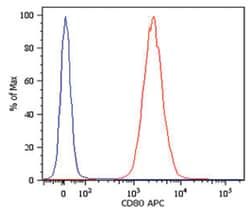
This antibody reacts with CD86 (B7-2), a 70 KDa type I transmembrane glycoprotein of immunoglobulin supergene family, expressed on professional antigen-presenting cells, such as dendritic cells, macrophages or activated B lymphocytes.
Content And Storage
Store at 4°C. Do not freeze.Aliquot to avoid repeated freezing and thawing.
Isotype
IgG1
Related Products

Description
- This gene encodes a type I membrane protein that is a member of the immunoglobulin superfamily
- This protein is expressed by antigen-presenting cells, and it is the ligand for two proteins at the cell surface of T cells, CD28 antigen and cytotoxic T-lymphocyte-associated protein 4
- Binding of this protein with CD28 antigen is a costimulatory signal for activation of the T-cell
- Binding of this protein with cytotoxic T-lymphocyte-associated protein 4 negatively regulates T-cell activation and diminishes the immune response
- Alternative splicing results in two transcript variants encoding different isoforms
- Additional transcript variants have been described, but their full-length sequences have not been determined
- [provided by RefSeq