89-114-482
AKT1 Rabbit anti-Human, Mouse, Rat, Polyclonal Antibody, Abnova™
Manufacturer: Abnova Corporation
Select a Size
| Pack Size | SKU | Availability | Price |
|---|---|---|---|
| Each of 1 | 89-114-482-Each-of-1 | In Stock | ₹ 53,133.00 |
89-114-482 - Each of 1
In Stock
Quantity
1
Base Price: ₹ 53,133.00
GST (18%): ₹ 9,563.94
Total Price: ₹ 62,696.94
Antigen
AKT1
Classification
Polyclonal
Description
Rabbit polyclonal antibody raised against a synthetic peptide of AKT1.
Formulation
In PBS (0.2% gelatin, 0.09% sodium azide)
Gene Alias
AKT/MGC99656/PKB/PKB-ALPHA/PRKBA/RAC/RAC-ALPHA
Host Species
Rabbit
Quantity
200 μg
Primary or Secondary
Primary
Target Species
Human, Mouse, Rat
Form
Liquid
Applications
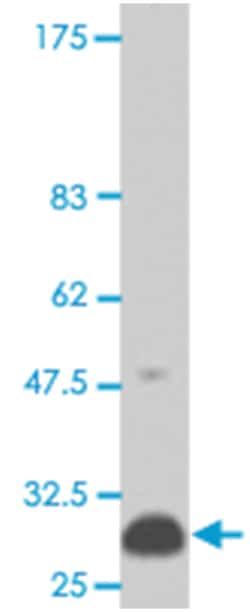
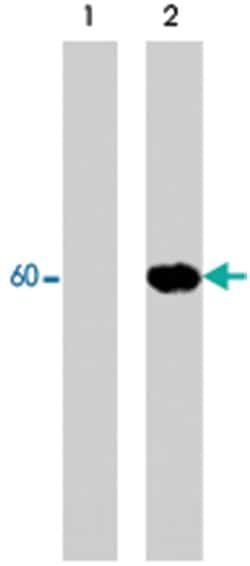
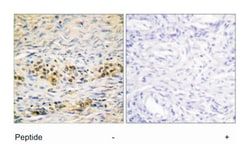
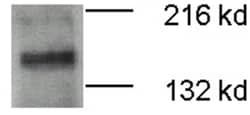
Immunohistochemistry (Frozen), Western Blot
Conjugate
Unconjugated
Dilution
The optimal working dilution should be determined by the end user.
Gene
AKT1
Gene Symbols
AKT1
Immunogen
A synthetic peptide (conjugated with KLH) corresponding to C-terminus of human AKT1.
Regulatory Status
RUO
Gene ID (Entrez)
207
Content And Storage
Store at 4°C. Do not freeze.
Related Products
Description
- The serine-threonine protein kinase encoded by the AKT1 gene is catalytically inactive in serum-starved primary and immortalized fibroblasts
- AKT1 and the related AKT2 are activated by platelet-derived growth factor
- The activation is rapid and specific, and it is abrogated by mutations in the pleckstrin homology domain of AKT1
- It was shown that the activation occurs through phosphatidylinositol 3-kinase
- In the developing nervous system AKT is a critical mediator of growth factor-induced neuronal survival
- Survival factors can suppress apoptosis in a transcription-independent manner by activating the serine/threonine kinase AKT1, which then phosphorylates and inactivates components of the apoptotic machinery
- Multiple alternatively spliced transcript variants have been found for this gene
- [provided by RefSeq