89-114-614
ING3, Goat, Polyclonal Antibody, Abnova™
Manufacturer: Abnova Corporation
Select a Size
| Pack Size | SKU | Availability | Price |
|---|---|---|---|
| Each of 1 | 89-114-614-Each-of-1 | In Stock | ₹ 1,04,664.00 |
89-114-614 - Each of 1
In Stock
Quantity
1
Base Price: ₹ 1,04,664.00
GST (18%): ₹ 18,839.52
Total Price: ₹ 1,23,503.52
Antigen
ING3
Classification
Polyclonal
Description
Goat polyclonal antibody raised against synthetic peptide of ING3.
Formulation
In 20mM KH2PO4, 150mM NaCl, pH 7.2 (0.01% sodium azide)
Gene Alias
Eaf4/FLJ20089/ING2/p47ING3
Host Species
Goat
Quantity
100 μg
Primary or Secondary
Primary
Target Species
Canine, Chimpanzee, Human, Orangutan, Rat
Form
Liquid
Applications
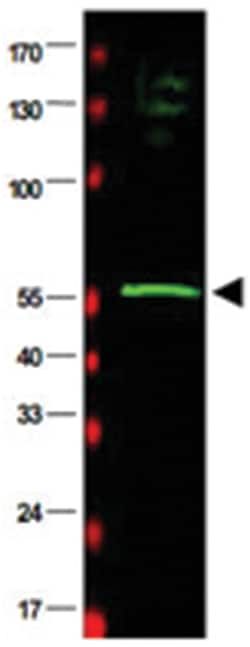
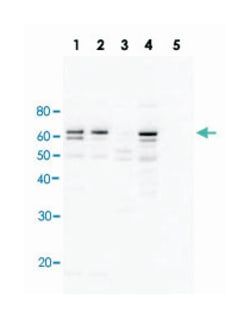
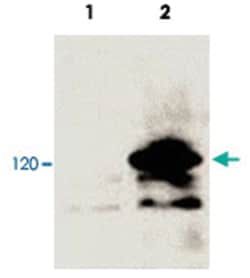
ELISA, Western Blot
Conjugate
Unconjugated
Dilution
ELISA (1:10000-1:40000) Western Blot (1:200-1:2000) The optimal working dilution should be determined by the end user.
Gene
ING3
Gene Symbols
ING3
Immunogen
A synthetic peptide corresponding to amino acids 294-304 of human ING3.
Regulatory Status
RUO
Gene ID (Entrez)
54556
Content And Storage
Store at 4°C. For long term storage store at -20°C.Aliquot to avoid repeated freezing and thawing.
Related Products

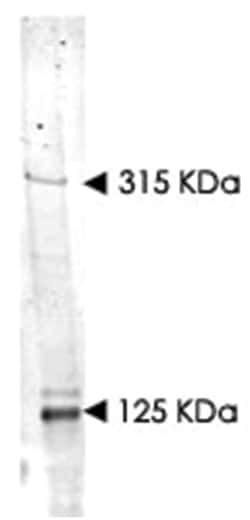
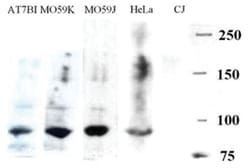
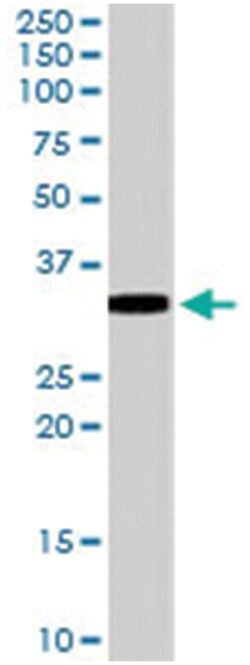
Description
- The protein encoded by this gene is similar to ING1, a tumor suppressor protein that can interact with TP53, inhibit cell growth, and induce apoptosis
- This protein contains a PHD-finger, which is a common motif in proteins involved in chromatin remodeling
- This gene can activate p53 trans-activated promoters, including promoters of p21/waf1 and bax
- Overexpression of this gene has been shown to inhibit cell growth and induce apoptosis
- Allelic loss and reduced expression of this gene were detected in head and neck cancers
- Two alternatively spliced transcript variants encoding different isoforms have been observed
- [provided by RefSeq