89-116-194
BAD Rabbit anti-Human, Mouse, Rat, Polyclonal Antibody, Abnova™
Manufacturer: Abnova Corporation
Select a Size
| Pack Size | SKU | Availability | Price |
|---|---|---|---|
| Each of 1 | 89-116-194-Each-of-1 | In Stock | ₹ 76,718.00 |
89-116-194 - Each of 1
In Stock
Quantity
1
Base Price: ₹ 76,718.00
GST (18%): ₹ 13,809.24
Total Price: ₹ 90,527.24
Antigen
BAD
Classification
Polyclonal
Description
Rabbit polyclonal antibody raised against synthetic peptide of BAD.
Formulation
In PBS (0.02% sodium azide)
Gene Accession No.
Q92934
Gene Symbols
BAD
Immunogen
A synthetic peptide corresponding to C-terminus 15 amino acids of human BAD.
Regulatory Status
RUO
Gene ID (Entrez)
572
Content And Storage
Store at 4°C for three months. For long term storage store at -20°C.Aliquot to avoid repeated freezing and thawing.
Applications
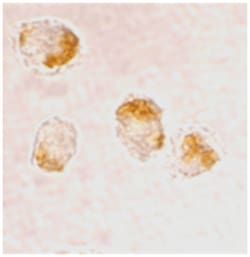
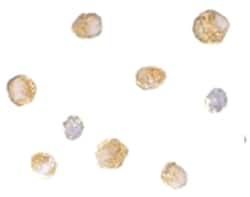
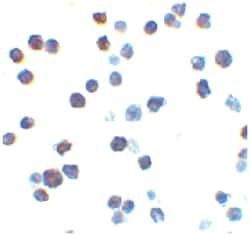
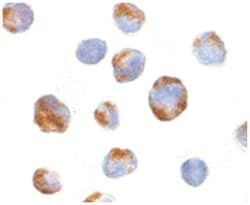
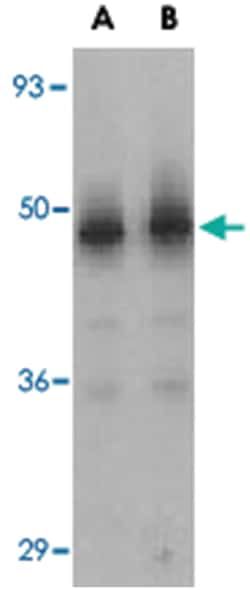
Immunohistochemistry (PFA fixed), Western Blot
Conjugate
Unconjugated
Dilution
Western Blot (0.5-1 ug/mL) The optimal working dilution should be determined by the end user.
Gene
BAD
Gene Alias
BBC2/BCL2L8
Host Species
Rabbit
Quantity
100 μg
Primary or Secondary
Primary
Target Species
Human, Mouse, Rat
Form
Liquid
Related Products



Description
- The protein encoded by this gene is a member of the BCL-2 family
- BCL-2 family members are known to be regulators of programmed cell death
- This protein positively regulates cell apoptosis by forming heterodimers with BCL-xL and BCL-2, and reversing their death repressor activity
- Proapoptotic activity of this protein is regulated through its phosphorylation
- Protein kinases AKT and MAP kinase, as well as protein phosphatase calcineurin were found to be involved in the regulation of this protein
- Alternative splicing of this gene results in two transcript variants which encode the same isoform
- [provided by RefSeq