NEFM, Goat, Polyclonal Antibody, Abnova™
Manufacturer: Abnova Corporation
Select a Size
| Pack Size | SKU | Availability | Price |
|---|---|---|---|
| Each of 1 | 89-118-917-Each-of-1 | In Stock | ₹ 70,399.00 |
89-118-917 - Each of 1
In Stock
Quantity
1
Base Price: ₹ 70,399.00
GST (18%): ₹ 12,671.82
Total Price: ₹ 83,070.82
Antigen
NEFM
Classification
Polyclonal
Conjugate
Unconjugated
Dilution
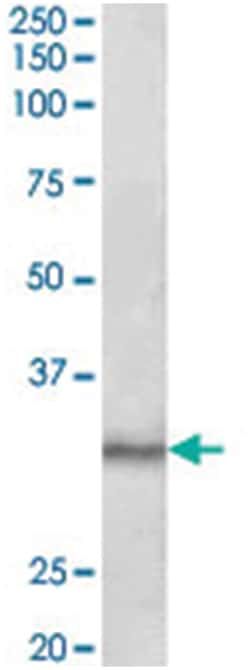
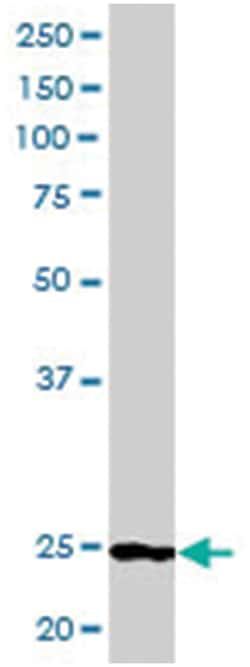
ELISA (1:128000) Western Blot (0.03-0.1 ug/mL) The optimal working dilution should be determined by the end user.
Gene
NEFM
Gene Symbols
NEFM
Immunogen
A synthetic peptide corresponding to amino acids at internal region of human NEFM.
Quantity
100 μg
Primary or Secondary
Primary
Test Specificity
This antibody is expected to recognize both reported isoforms (NP_005373.2; NP_001099011.1).
Content And Storage
Store at -20°C.Aliquot to avoid repeated freezing and thawing.
Applications
ELISA, Western Blot
Concentration
0.5 mg/mL
Description
Goat polyclonal antibody raised against synthetic peptide of NEFM.
Formulation
In Tris saline, pH 7.3 (0.5% BSA, 0.02% sodium azide)
Gene Alias
NEF3/NF-M/NFM
Host Species
Goat
Purification Method
Antigen affinity purification
Regulatory Status
RUO
Gene ID (Entrez)
4741
Target Species
Human
Form
Liquid
Related Products
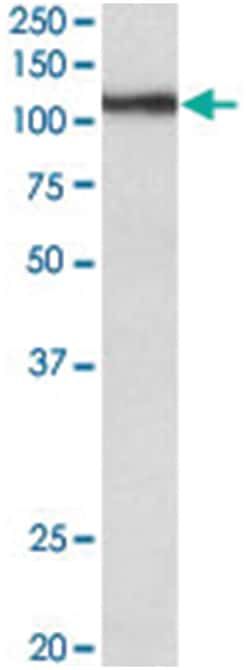
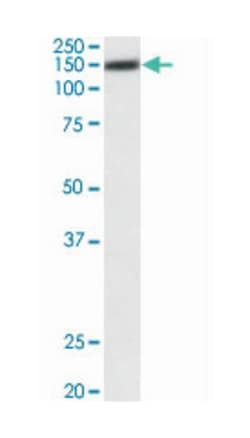

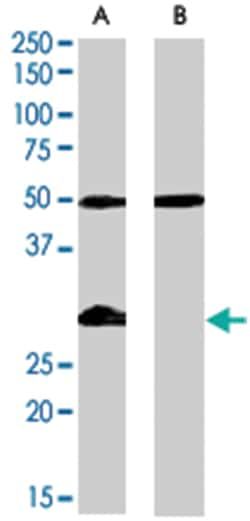
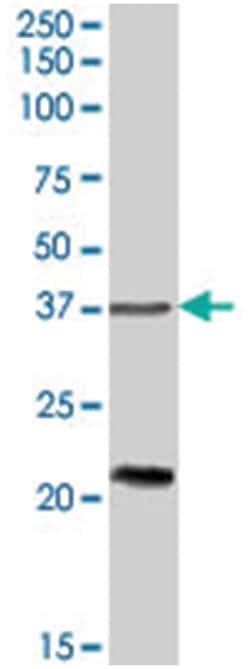
Description
- Neurofilaments are type IV intermediate filament heteropolymers composed of light, medium, and heavy chains
- Neurofilaments comprise the axoskeleton and functionally maintain neuronal caliber
- They may also play a role in intracellular transport to axons and dendrites
- This gene encodes the medium neurofilament protein
- This protein is commonly used as a biomarker of neuronal damage
- Alternative splicing results in multiple transcript variants encoding distinct isoforms
- [provided by RefSeq Sequence: C-QASHITVERKDYLK