BAI2 Rabbit anti-Dog, Hamster, Horse, Human, Monkey, Mouse, Pig, Rat, Polyclonal Antibody, Abnova™
Manufacturer: Abnova Corporation
Select a Size
| Pack Size | SKU | Availability | Price |
|---|---|---|---|
| Each of 1 | 89-127-204-Each-of-1 | In Stock | ₹ 87,131.00 |
89-127-204 - Each of 1
In Stock
Quantity
1
Base Price: ₹ 87,131.00
GST (18%): ₹ 15,683.58
Total Price: ₹ 1,02,814.58
Antigen
BAI2
Classification
Polyclonal
Description
Rabbit polyclonal antibody raised against synthetic peptide of BAI2.
Formulation
In PBS (0.09% sodium azide)
Gene Symbols
BAI2
Immunogen
A synthetic peptide corresponding to 16 amino acids at N-terminal extracellular domain of human BAI2.
Quantity
50 μg
Primary or Secondary
Primary
Test Specificity
BLAST analysis of the peptide immunogen showed no homology with other human proteins.
Content And Storage
Store at 4°C. For long term storage store at -80°C.Aliquot to avoid repeated freezing and thawing.
Applications
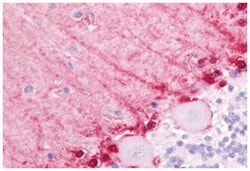
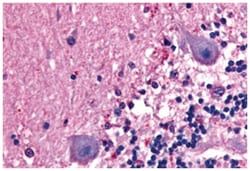
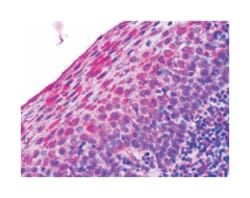
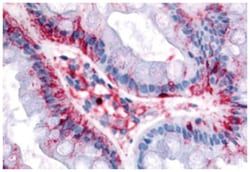
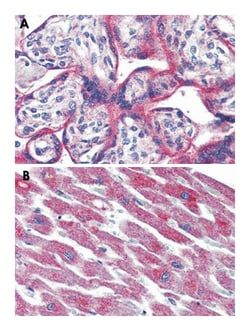
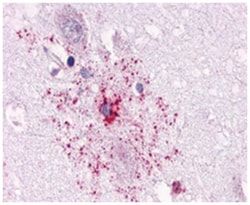
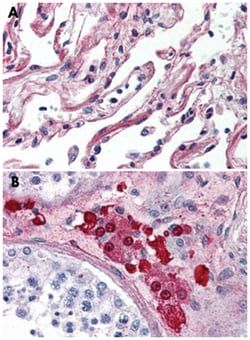
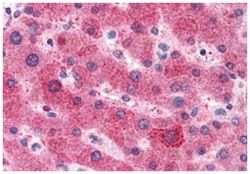
Immunohistochemistry (PFA fixed)
Conjugate
Unconjugated
Dilution
Immunohistochemistry (Formalin/PFA-fixed paraffin-embedded sections) (2-3 ug/mL) The optimal working dilution should be determined by the end user.
Gene
BAI2
Host Species
Rabbit
Purification Method
Immunoaffinity chromatography
Regulatory Status
RUO
Gene ID (Entrez)
576
Target Species
Canine, Equine, Hamster, Human, Monkey, Mouse, Porcine, Rat
Form
Liquid
Related Products
Description
- BAI1, a p53-target gene, encodes brain-specific angiogenesis inhibitor, a seven-span transmembrane protein and is thought to be a member of the secretin receptor family
- Brain-specific angiogenesis proteins BAI2 and BAI3 are similar to BAI1 in structure, have similar tissue specificities and may also play a role in angiogenesis
- [provided by RefSeq