FGA, Goat, Polyclonal Antibody, Abnova™
Manufacturer: Abnova Corporation
Select a Size
| Pack Size | SKU | Availability | Price |
|---|---|---|---|
| Each of 1 | 89-129-566-Each-of-1 | In Stock | ₹ 1,04,664.00 |
89-129-566 - Each of 1
In Stock
Quantity
1
Base Price: ₹ 1,04,664.00
GST (18%): ₹ 18,839.52
Total Price: ₹ 1,23,503.52
Antigen
FGA
Classification
Polyclonal
Description
Goat polyclonal antibody raised against native FGA.
Formulation
Lyophilized from 20mM potassium phosphate buffer, 150mM NaCl, pH 7.2 (0.01% sodium azide)
Gene Alias
Fib2/MGC119422/MGC119423/MGC119425
Host Species
Goat
Quantity
100 μg
Primary or Secondary
Primary
Target Species
Human
Form
Lyophilized
Applications
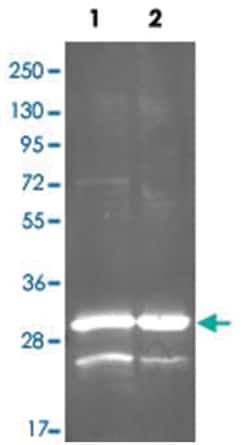
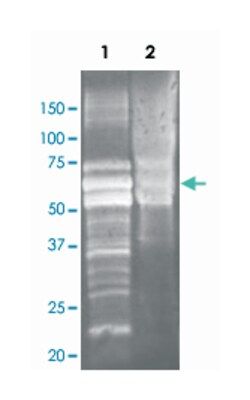
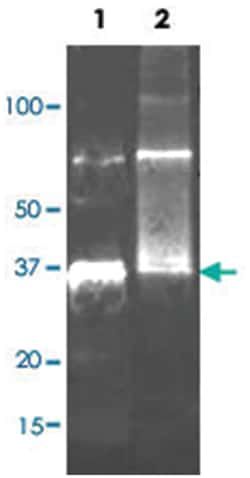
ELISA, Western Blot
Conjugate
Unconjugated
Dilution
ELISA (1:20000 - 1:100000) Western Blot (1:2000-1:10000) The optimal working dilution should be determined by the end user.
Gene
FGA
Gene Symbols
FGA
Immunogen
Native purified FGA from human plasma.
Regulatory Status
RUO
Gene ID (Entrez)
2243
Content And Storage
Store at 4°C on dry atmosphere. After reconstitution with 0.1mL of deionized water store at -20°C or lower. Aliquot to avoid repeated freezing and thawing.
Isotype
IgG
Related Products
Description
- The protein encoded by this gene is the alpha component of fibrinogen, a blood-borne glycoprotein comprised of three pairs of nonidentical polypeptide chains
- Following vascular injury, fibrinogen is cleaved by thrombin to form fibrin which is the most abundant component of blood clots
- In addition, various cleavage products of fibrinogen and fibrin regulate cell adhesion and spreading, display vasoconstrictor and chemotactic activities, and are mitogens for several cell types
- Mutations in this gene lead to several disorders, including dysfibrinogenemia, hypofibrinogenemia, afibrinogenemia and renal amyloidosis
- Alternative splicing results in two isoforms which vary in the carboxy-terminus
- [provided by RefSeq