89-130-214
BGN, Rabbit, Polyclonal Antibody, Abnova™
Manufacturer: Abnova Corporation
Select a Size
| Pack Size | SKU | Availability | Price |
|---|---|---|---|
| Each of 1 | 89-130-214-Each-of-1 | In Stock | ₹ 70,488.00 |
89-130-214 - Each of 1
In Stock
Quantity
1
Base Price: ₹ 70,488.00
GST (18%): ₹ 12,687.84
Total Price: ₹ 83,175.84
Antigen
BGN
Classification
Polyclonal
Description
Rabbit polyclonal antibody raised against recombinant BGN.
Formulation
In PBS, pH 7.2 (40% glycerol, 0.02% sodium azide)
Gene Alias
DSPG1/PG-S1/PGI/SLRR1A
Host Species
Rabbit
Purification Method
Antigen affinity purification
Regulatory Status
RUO
Gene ID (Entrez)
633
Content And Storage
Store at 4°C. For long term storage store at -20°C.Aliquot to avoid repeated freezing and thawing.
Isotype
IgG
Applications
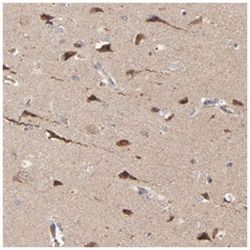
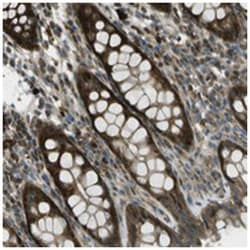
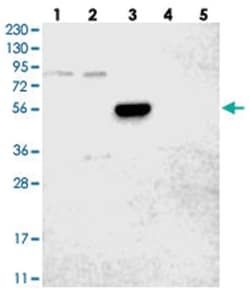
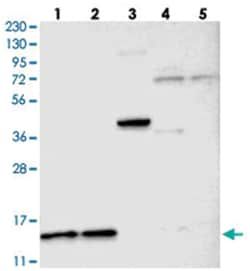
Immunohistochemistry, Western Blot
Conjugate
Unconjugated
Dilution
Immunohistochemistry (1:500-1:1000) Western Blot (1:250-1:500) The optimal working dilution should be determined by the end user.
Gene
BGN
Gene Symbols
BGN
Immunogen
Recombinant protein corresponding to amino acids of human BGN.
Quantity
100 μL
Primary or Secondary
Primary
Target Species
Human
Form
Liquid
Related Products
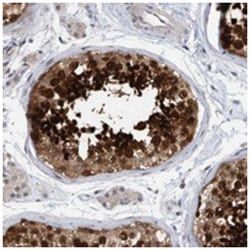
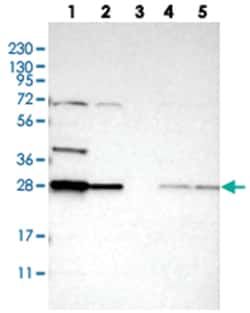
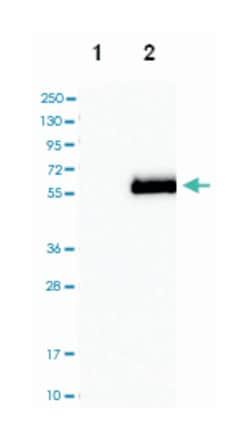
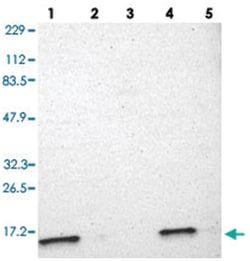
Description
- The protein encoded by this gene is a small cellular or pericellular matrix proteoglycan that is closely related in structure to two other small proteoglycans, decorin and fibromodulin
- The encoded protein and decorin are thought to be the result of a gene duplication
- Decorin contains one attached glycosaminoglycan chain, while this protein probably contains two chains
- For this reason, this protein is called biglycan
- This protein is thought to function in connective tissue metabolism by binding to collagen fibrils and transferring growth factor-beta
- It may promote neuronal survival
- This gene is a candidate gene for the Happle syndrome
- [provided by RefSeq Sequence: RGFWDFTLDDGPFMMNDEEASGADTSGVLDPDSVTPTYSAMCPFGCHCHLRVVQCSDLGLKSVPKEISPDTTLLDLQNNDISELRKDDFKGLQHLYALVLVNNKISKIHEKAFSPLRKLQKLYISKNHLVEIPPNLPSSL