KCNJ11, Goat, Polyclonal Antibody, Abnova™
Manufacturer: Abnova Corporation
Select a Size
| Pack Size | SKU | Availability | Price |
|---|---|---|---|
| Each of 1 | 89-133-375-Each-of-1 | In Stock | ₹ 70,399.00 |
89-133-375 - Each of 1
In Stock
Quantity
1
Base Price: ₹ 70,399.00
GST (18%): ₹ 12,671.82
Total Price: ₹ 83,070.82
Antigen
KCNJ11
Classification
Polyclonal
Conjugate
Unconjugated
Dilution
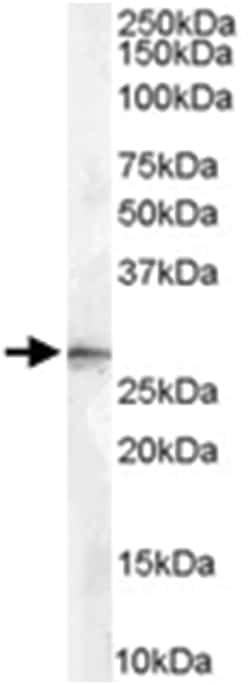
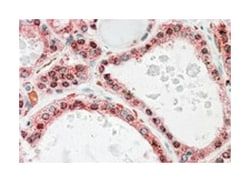
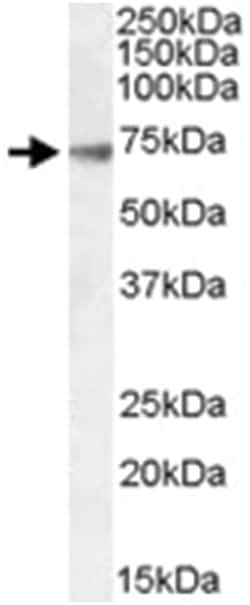
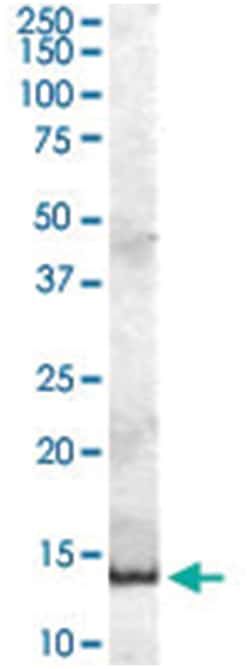
ELISA (1:32000) Western blot (0.1-0.3 ug/mL) Immunohistochemistry (Formalin/PFA-fixed paraffin-embedded sections) (3-5 ug/mL) The optimal working dilution should be determined by the end user.
Gene
KCNJ11
Gene Symbols
KCNJ11
Immunogen
A synthetic peptide corresponding to human KCNJ11.
Quantity
100 μg
Primary or Secondary
Primary
Target Species
Human
Form
Liquid
Applications
ELISA, Immunohistochemistry (PFA fixed), Western Blot
Concentration
0.5 mg/mL
Description
Goat polyclonal antibody raised against synthetic peptide of KCNJ11.
Formulation
In Tris saline, pH 7.3 (0.5% BSA, 0.02% sodium azide)
Gene Alias
BIR/HHF2/IKATP/KIR6.2/MGC133230/PHHI/TNDM3
Host Species
Goat
Purification Method
Antigen affinity purification
Regulatory Status
RUO
Gene ID (Entrez)
3767
Content And Storage
Store at -20°C.Aliquot to avoid repeated freezing and thawing.
Related Products
Description
- Potassium channels are present in most mammalian cells, where they participate in a wide range of physiologic responses
- The protein encoded by this gene is an integral membrane protein and inward-rectifier type potassium channel
- The encoded protein, which has a greater tendency to allow potassium to flow into a cell rather than out of a cell, is controlled by G-proteins and is found associated with the sulfonylurea receptor SUR
- Mutations in this gene are a cause of familial persistent hyperinsulinemic hypoglycemia of infancy (PHHI), an autosomal recessive disorder characterized by unregulated insulin secretion
- Defects in this gene may also contribute to autosomal dominant noninsulin-dependent diabetes mellitus type II (NIDDM), transient neonatal diabetes mellitus type 3 (TNDM3), and permanent neonatal diabetes mellitus (PNDM)
- [provided by RefSeq Sequence: C-AEDPAKPRYRARQ