PDCD1 Rabbit anti-Human, Clone:RM309, Abnova™
Manufacturer: Abnova Corporation
Select a Size
| Pack Size | SKU | Availability | Price |
|---|---|---|---|
| Each of 1 | 89-333-283-Each-of-1 | In Stock | ₹ 49,306.00 |
89-333-283 - Each of 1
In Stock
Quantity
1
Base Price: ₹ 49,306.00
GST (18%): ₹ 8,875.08
Total Price: ₹ 58,181.08
Antigen
PDCD1
Classification
Monoclonal
Conjugate
Unconjugated
Dilution
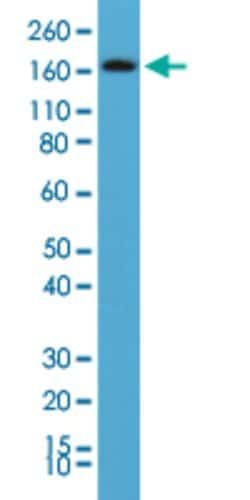
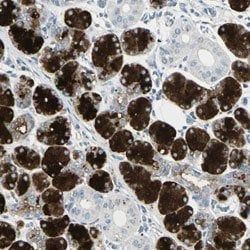
Immunohistochemistry (Formalin/PFA-fixed paraffin-embedded sections) (1:200-500)Western Blot (1:100-200)The optimal working dilution should be determined by the end user.
Gene
PDCD1
Host Species
Rabbit
Quantity
100 μL
Test Specificity
This antibody reacts to human PD-1 (Programmed cell death protein 1) (CD279).
Content And Storage
Store at -20°C.Aliquot to avoid repeated freezing and thawing.
Form
Liquid
Applications
Immunohistochemistry (Paraffin), Western Blot
Clone
RM309
Description
programmed cell death 1
Formulation
In PBS (50% glycerol, 1% BSA, 0.09% sodium azide)
Gene Alias
CD279, PD1, SLEB2, hPD-1, hPD-l
Immunogen
A peptide corresponding to N-terminus of human PDCD1.
Gene ID (Entrez)
5133
Target Species
Human
Product Type
Antibody
Isotype
IgG
Related Products




Description
- Description This gene encodes a cell surface membrane protein of the immunoglobulin superfamily
- This protein is expressed in pro-B-cells and is thought to play a role in their differentiation
- In mice, expression of this gene is induced in the thymus when anti-CD3 antibodies are injected and large numbers of thymocytes undergo apoptosis
- Mice deficient for this gene bred on a BALB/c background developed dilated cardiomyopathy and died from congestive heart failure
- These studies suggest that this gene product may also be important in T cell function and contribute to the prevention of autoimmune diseases
- [provided by RefSeq]