ACTA1 Mouse anti-Human, Clone: 337CT30.10.1, Abnova™
Manufacturer: Abnova Corporation
Select a Size
| Pack Size | SKU | Availability | Price |
|---|---|---|---|
| Each of 1 | 89-933-510-Each-of-1 | In Stock | ₹ 51,887.00 |
89-933-510 - Each of 1
In Stock
Quantity
1
Base Price: ₹ 51,887.00
GST (18%): ₹ 9,339.66
Total Price: ₹ 61,226.66
Antigen
ACTA1
Classification
Monoclonal
Conjugate
Unconjugated
Dilution
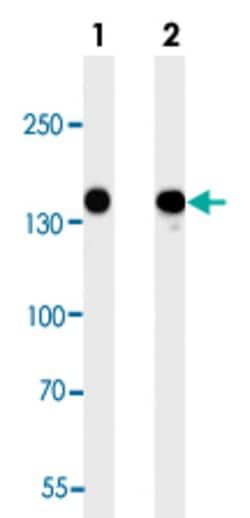
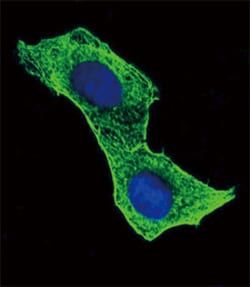
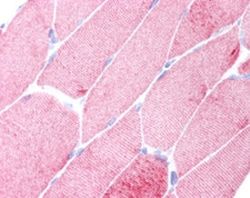
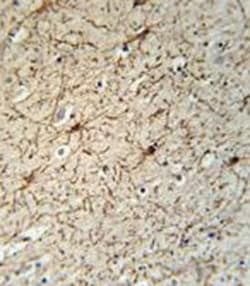
Flow Cytometry (1:10-1:50) Immunohistochemistry (1:10-1:50) Western Blot (1:100-1:500) The optimal working dilution should be determined by the end user.
Gene Alias
ACTA/ASMA/CFTD/CFTD1/CFTDM/MPFD/NEM1/NEM2/NEM3
Host Species
Mouse
Purification Method
Protein G purification
Regulatory Status
RUO
Gene ID (Entrez)
58
Content And Storage
Store at 4°C. For long term storage store at -20°C.Aliquot to avoid repeated freezing and thawing.
Isotype
IgG1 κ
Applications
Flow Cytometry, Immunohistochemistry (PFA fixed), Western Blot
Clone
337CT30.10.1
Description
Mouse monoclonal antibody raised against human ACTA1.
Formulation
In PBS (0.09% sodium azide)
Gene Symbols
ACTA1
Immunogen
Recombinant protein corresponding to human ACTA1.
Quantity
400 μL
Primary or Secondary
Primary
Target Species
Human
Form
Liquid
Related Products
Description
- The product encoded by this gene belongs to the actin family of proteins, which are highly conserved proteins that play a role in cell motility, structure and integrity
- Alpha, beta and gamma actin isoforms have been identified, with alpha actins being a major constituent of the contractile apparatus, while beta and gamma actins are involved in the regulation of cell motility
- This actin is an alpha actin that is found in skeletal muscle
- Mutations in this gene cause nemaline myopathy type 3, congenital myopathy with excess of thin myofilaments, congenital myopathy with cores, and congenital myopathy with fiber-type disproportion, diseases that lead to muscle fiber defects
- [provided by RefSeq]