AKT3 Mouse anti-Human, Mouse, Clone: 154CT4.5.3, Abnova™
Manufacturer: Abnova Corporation
Select a Size
| Pack Size | SKU | Availability | Price |
|---|---|---|---|
| Each of 1 | 89-933-532-Each-of-1 | In Stock | ₹ 51,887.00 |
89-933-532 - Each of 1
In Stock
Quantity
1
Base Price: ₹ 51,887.00
GST (18%): ₹ 9,339.66
Total Price: ₹ 61,226.66
Antigen
AKT3
Classification
Monoclonal
Conjugate
Unconjugated
Dilution
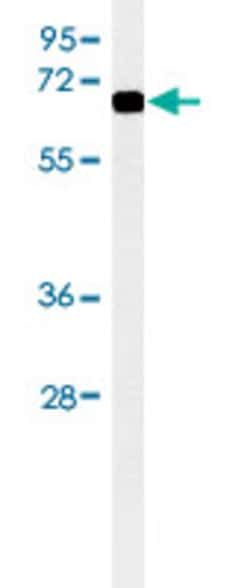
Immunohistochemistry (1:50-1:100) Western Blot (1:100-1:500) The optimal working dilution should be determined by the end user.
Gene Alias
DKFZp434N0250/PKB-GAMMA/PKBG/PRKBG/RAC-PK-gamma/RAC-gamma/STK-2
Host Species
Mouse
Purification Method
Protein G purification
Regulatory Status
RUO
Gene ID (Entrez)
10000
Content And Storage
Store at 4°C. For long term storage store at -20°C.Aliquot to avoid repeated freezing and thawing.
Isotype
IgG1 λ
Applications
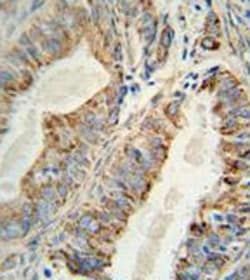
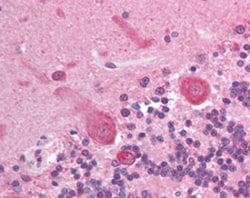
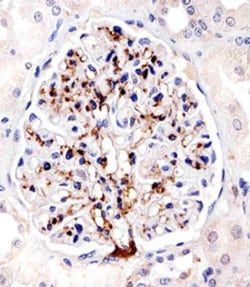
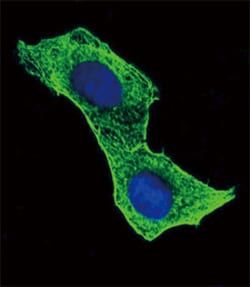
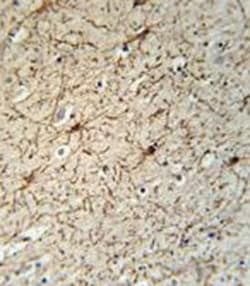
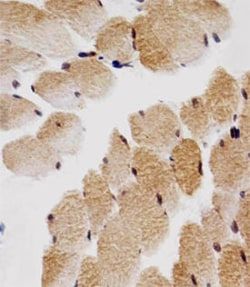
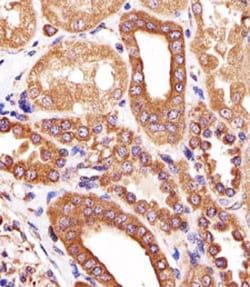
Immunohistochemistry (PFA fixed), Western Blot
Clone
154CT4.5.3
Description
Mouse monoclonal antibody raised against human AKT3.
Formulation
In PBS (0.09% sodium azide)
Gene Symbols
AKT3
Immunogen
Recombinant protein corresponding to human AKT3.
Quantity
400 μL
Primary or Secondary
Primary
Target Species
Human, Mouse
Form
Liquid
Related Products
Description
- The protein encoded by this gene is a member of the AKT, also called PKB, serine/threonine protein kinase family
- AKT kinases are known to be regulators of cell signaling in response to insulin and growth factors
- They are involved in a wide variety of biological processes including cell proliferation, differentiation, apoptosis, tumorigenesis, as well as glycogen synthesis and glucose uptake
- This kinase has been shown to be stimulated by platelet-derived growth factor (PDGF), insulin, and insulin-like growth factor 1 (IGF1)
- Alternatively splice transcript variants encoding distinct isoforms have been described
- [provided by RefSeq]