EPCAM Mouse anti-Human, Clone: EGP40/1120, Abnova™
Manufacturer: Abnova Corporation
Select a Size
| Pack Size | SKU | Availability | Price |
|---|---|---|---|
| Each of 1 | 89-934-094-Each-of-1 | In Stock | ₹ 66,928.00 |
89-934-094 - Each of 1
In Stock
Quantity
1
Base Price: ₹ 66,928.00
GST (18%): ₹ 12,047.04
Total Price: ₹ 78,975.04
Antigen
EPCAM
Classification
Monoclonal
Conjugate
Unconjugated
Dilution
Flow Cytometry (0.5-1 ug/106cells in 0.1 mL) Immunofluorescence (1-2 ug/mL) Immunohistochemistry (Formalin/PFA-fixed paraffin-embedded sections) (0.25-0.5 ug/mL) Western Blot (0.5-1 ug/mL) The optimal working dilution should be det
Gene Alias
17-1A/323/A3/CD326/CO-17A/CO17-1A/EGP/EGP-2/EGP34/EGP40/ESA/Ep-CAM/GA733-2/HEA125/KS1/4/KSA/M4S1/MH99/MIC18/MK-1/MOC31/TACST-1/TACSTD1/TROP1/hEGP-2
Host Species
Mouse
Purification Method
Protein A/G purification
Regulatory Status
RUO
Gene ID (Entrez)
4072
Content And Storage
Store at -20 to -80°C.Aliquot to avoid repeated freezing and thawing.
Isotype
IgG1 κ
Applications
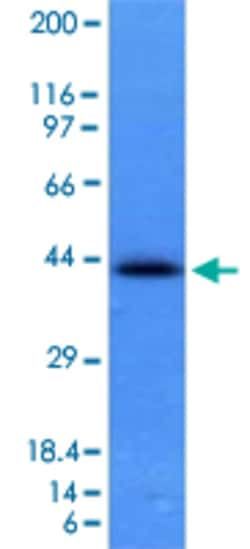
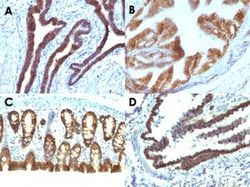
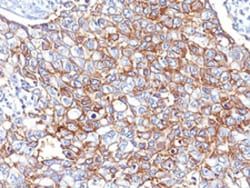
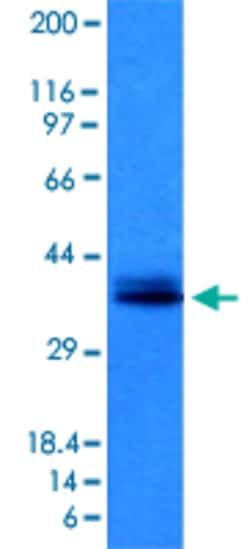
Flow Cytometry, Immunofluorescence, Immunohistochemistry (PFA fixed), Western Blot
Clone
EGP40/1120
Description
Mouse monoclonal antibody raised against full length recombinant human EPCAM.
Formulation
In 10mM PBS.
Gene Symbols
EPCAM
Immunogen
Recombinant protein corresponding to full length human EPCAM.
Quantity
100 μg
Primary or Secondary
Primary
Target Species
Human
Form
Liquid
Related Products
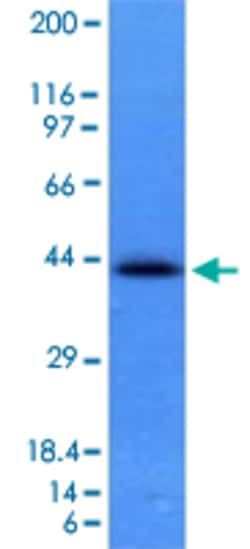
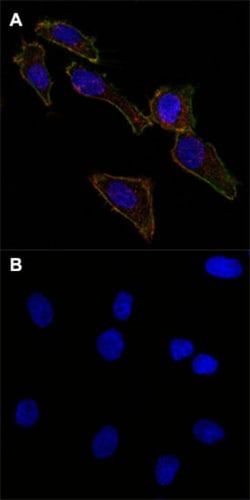
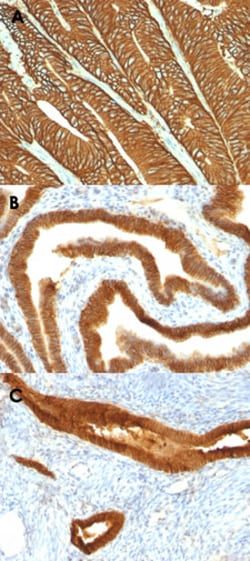
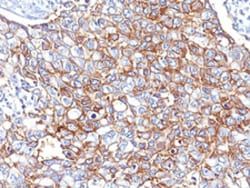
Description
- Description This gene encodes a carcinoma-associated antigen and is a member of a family that includes at least two type I membrane proteins
- This antigen is expressed on most normal epithelial cells and gastrointestinal carcinomas and functions as a homotypic calcium-independent cell adhesion molecule
- The antigen is being used as a target for immunotherapy treatment of human carcinomas
- Mutations in this gene result in congenital tufting enteropathy
- [provided by RefSeq]