MilliporeSigma™ Surfactant Protein D, Rabbit, Unlabeled, Polyclonal,
Manufacturer: MilliporeSigma™
Select a Size
| Pack Size | SKU | Availability | Price |
|---|---|---|---|
| Each of 1 | ABS574MI-Each-of-1 | In Stock | ₹ 42,968.31 |
ABS574MI - Each of 1
In Stock
Quantity
1
Base Price: ₹ 42,968.31
GST (18%): ₹ 7,734.296
Total Price: ₹ 50,702.606
Antigen
Surfactant Protein D
Classification
Polyclonal
Conjugate
Unconjugated
Gene
SFTPD, COLEC7, PSPD, SFTP4
Host Species
Rabbit
Purification Method
Affinity Purified
Regulatory Status
RUO
Primary or Secondary
Primary
Test Specificity
This rabbit polyclonal antibody targets a sequence within the C-type lectin domain of human surfactant protein D.
Content And Storage
Stable for 1 year at 2°-8°C from date of receipt.
Applications
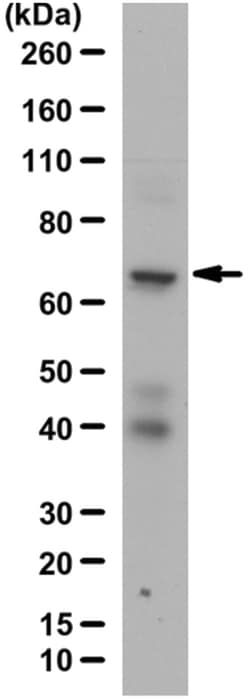
Western Blot
Concentration
Please refer to lot specific datasheet.
Formulation
Purified rabbit polyclonal antibody in buffer containing 0.1M Tris-Glycine (pH 7.4), 150mM NaCl with 0.05% Sodium Azide.
Gene Accession No.
P35247
Immunogen
KLH-conjugated linear peptide corresponding to a sequence within the C-type lectin domain of human surfactant protein D.
Quantity
100 μg
Research Discipline
Signaling
Gene ID (Entrez)
NP_003010
Target Species
Human
Related Products

Description
- Pulmonary surfactant-associated protein D (UniProt P35247; also known as Collectin-7, Lung surfactant protein D, PSP-D, SP-D) is encoded by the SFTPD (also known as COLEC7, PSPD, SFTP4) gene (Gene ID 6441) in human
- Surfactant, produced by alveolar type II cells and airway Clara cells, resides at the air-liquid interface of the lungs and is most commonly known for its role in reducing surface tension
- Surfactant is a lipoprotein complex composed of approximately 10% proteins, including surfactant protein A (SP-A), SP-B, SP-C, and SP-D
- SP-A and SP-D belong to the collectin family of proteins and can modulate innate immunity
- SP-D is known to enhance pulmonary clearance of pathogens, such as Pseudomonous aerginosa, Klebsiella pneumonia, respiratory syncytial virus (RSV) and Influenza virus
- SP-D is also shown to modify allergic responsee in the lungs by binding common allergens, including house dust mite and pollen particles
- SP-A-deficient and SP-D-deficient mice are susceptible to bleomycin-induced lung injury and display increased cellular inflammation, more severe lung fibrosis, and reduced survival
- In addition to lung, SP-D is also reported to be detected in extrapulmonary tissues, such as kidney and pancreas
- Serum levels of either SP-A or SP-D in human are correlated with mortality in patients with pulmonary fibrosis
- Human SP-D is produced with a signal peptide sequence (a.a
- 1-20), which is removed posttranslationally to yield the mature protein (a.a
- 21-375) that contains a collagen-like domain (a.a
- 46-222), a coiled coil region (a.a
- 223-252), and a C-type lectin domain (a.a
- 260-375).