AHB0061
Tau (Cleaved Asp421, Asp422) Monoclonal Antibody (TauC3), Invitrogen™
Manufacturer: Invitrogen
Select a Size
| Pack Size | SKU | Availability | Price |
|---|---|---|---|
| Each of 1 | AHB0061-Each-of-1 | In Stock | ₹ 40,050.00 |
AHB0061 - Each of 1
In Stock
Quantity
1
Base Price: ₹ 40,050.00
GST (18%): ₹ 7,209.00
Total Price: ₹ 47,259.00
Antigen
Tau (Cleaved Asp421, Asp422)
Classification
Monoclonal
Concentration
0.5 mg/mL
Formulation
PBS with 1% BSA and 0.1% sodium azide; pH 7.2
Gene Accession No.
P10636, P10637, P19332
Gene Symbols
MAPT
Immunogen
KLH-CSSTGSIDMVD, corresponding to the C terminus of tau truncated at Asp421.
Quantity
50 μg
Primary or Secondary
Primary
Target Species
Human, Mouse, Rat
Product Type
Antibody
Isotype
IgG1 κ
Applications
Immunocytochemistry, Immunohistochemistry (Paraffin), Immunoprecipitation, Western Blot
Clone
TauC3
Conjugate
Unconjugated
Gene
MAPT
Gene Alias
map tau; microtubules; neurofibrillary tangles
Host Species
Mouse
Purification Method
Affinity chromatography
Regulatory Status
RUO
Gene ID (Entrez)
17762, 29477, 4137
Content And Storage
-20°C
Form
Liquid
Related Products

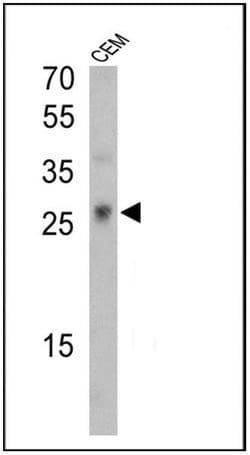

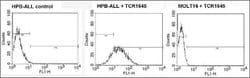
Description
- This antibody recognizes tau when truncated at Asp421
- Several caspases, including caspase-3, caspase-7, and caspase-8, cleave tau at this site, yielding the truncated form of the protein
- This antibody does not react with full-length tau, or with tau truncated at Glu391 or Ala429
- This antibody provides a tool for studying neuronal cell apoptosis
- Recommended Positive Control: Tau and caspase-3 cleaved tau
- Tau is a neuronal microtubule-associated protein found predominantly on axons
- The function of Tau is to promote tubulin polymerization and stabilize microtubules
- The C-terminus binds axonal microtubules while the N- terminus binds neural plasma membrane components, suggesting that tau functions as a linker protein between both
- Axonal polarity is predetermined by TAU/MAPT localization (in the neuronal cell) in the domain of the cell body defined by the centrosome
- The short isoforms allow plasticity of the cytoskeleton while the longer isoforms may preferentially play a role in its stabilization
- In its hyper-phosphorylated form, Tau is the major component of paired helical filaments (PHF), the building block of neurofibrillary lesions in Alzheimer's diseases (AD) brain
- Hyper-phosphorylation impairs the microtubule binding function of Tau, resulting in the destabilization of microtubules in AD brains, μgtimately leading to the degeneration of the affected neurons
- Numerous serine/threonine kinases phosphorylate Tau, including GSK-3beta, protein kinase A (PKA), cyclindependent kinase 5 (cdk5) and casein kinase II
- Hyper-phosphorylated Tau is found in neurofibrillary lesions in a range and other central nervous system disorders such as Pick's disease, frontotemporal dementia, cortico-basal degeneration and progressive supranuclear palsy.