BDB557299
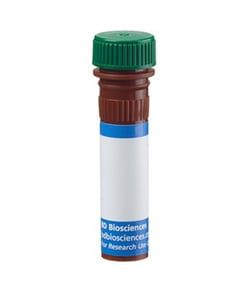
CD154 Mouse anti-Human, PE, Clone: TRAP1, BD
Manufacturer: Fischer Scientific
The price for this product is unavailable. Please request a quote
Antigen
CD154
Classification
Monoclonal
Conjugate
PE
Formulation
Aqueous buffered solution containing BSA and ≤0.09% sodium azide.
Purification Method
Affinity Purified
Regulatory Status
RUO
Primary or Secondary
Primary
Content And Storage
Store undiluted at 4°C and protected from prolonged exposure to light. Do not freeze.
Applications
Flow Cytometry
Clone
TRAP1
Description
CD40LG; CD40 ligand; CD40L; TNFSF5; T-BAM; TRAP
Host Species
Mouse
Quantity
50 Tests
Research Discipline
Immunology
Target Species
Baboon, Cynomolgus, Human, Rhesus Monkey
Isotype
IgG1 κ
Related Products



Description
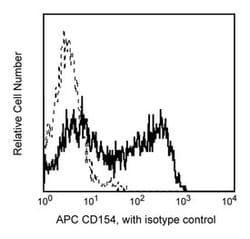
- The TRAP1 monoclonal antibody specifically binds to CD154
- CD154 is a 39 kDa type II membrane glycoprotein that is a member of the tumor necrosis factor superfamily, Tumor necrosis factor ligand superfamily member 5 (TNFSF5)
- CD154 is expressed on a variety of cell types including activated CD4+ T cells and some CD8+ T cells, NK cells, mast cells and basophils
- CD154 is also known as CD40 ligand (CD40L); it serves as a ligand for CD40 that is expressed on B cells, macrophages, and dendritic cells
- The expression of CD154 by activated T-helper cells costimulates B-cell activation and proliferation through binding to CD40 expressed on B cells
- In response to T-dependent antigens, the CD154 and CD40 interaction is required for B-lymphocyte differentiation, including immunoglobulin production and isotype switching and memory B cell generation
- The TRAP1 antibody can partially block T cell-B cell interaction and inhibit the subsequent proliferation, differentiation, and memory formation of B cells
- It has been reported that patients with X-linked hyper-IgM syndrome have defective expression of functional CD154 due to mutations in the CD40LG gene that encodes CD154.