BDB610701
BM28 Mouse, Unlabeled, Clone: 46, BD
Manufacturer: Fischer Scientific
Select a Size
| Pack Size | SKU | Availability | Price |
|---|---|---|---|
| Each of 1 | BDB610701-Each-of-1 | In Stock | ₹ 50,596.50 |
BDB610701 - Each of 1
In Stock
Quantity
1
Base Price: ₹ 50,596.50
GST (18%): ₹ 9,107.37
Total Price: ₹ 59,703.87
Antigen
BM28
Classification
Monoclonal
Concentration
250μg/mL
Formulation
Aqueous buffered solution containing BSA, glycerol, and ≤0.09% sodium azide.
Immunogen
Aqueous buffered solution containing BSA, glycerol, and ≤0.09% sodium azide.
Quantity
150 μg
Research Discipline
Cell Biology
Target Species
Canine, Chicken, Human, Mouse, Rat
Isotype
IgG1
Applications
Western Blot
Clone
46
Conjugate
Unconjugated
Host Species
Mouse
Purification Method
Affinity Purified
Regulatory Status
RUO
Primary or Secondary
Primary
Content And Storage
Store undiluted at -20°C.
Related Products
Description
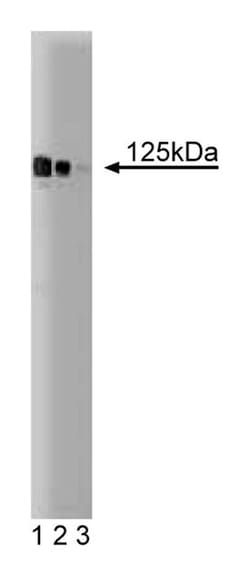
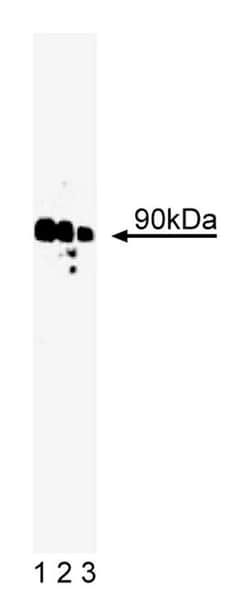
- BM28 is a phosphoprotein that migrates at 125kDa in SDS PAGE with a hyperphosphorylated form migrating as a slightly slower band
- The ratio of the phosphorylation states alters with the phases of cell cycle - in M, the “fast” phosphorylated BM28 is the major form found, while in G1 phase, the “slow”, hyperphosphorylated BM28 predominates
- The cellular localization of BM28 is also cell cycle dependent
- In G1, most of the BM28 is chromatin bound, whereas, by M phase, the BM28 is still nuclear, but not associated with the DNA
- BM28 is necessary for both entry into S phase and cell division as determined by microinjection inhibition experiments
- Microinjection of a BM28 antibody into synchronised cells in G1 phase inhibits DNA replication
- When injected during S phase or later, no effect on DNA replication is seen, but cell division is inhibited
- Immunofluorescence, Immunohistochemistry, Immunoprecipitation, Western Blotting