NUP153 Recombinant Rabbit Monoclonal Antibody (8D4), Invitrogen™
Manufacturer: Thermo Scientific
Select a Size
| Pack Size | SKU | Availability | Price |
|---|---|---|---|
| Each of 1 | FEMA549893-Each-of-1 | In Stock | ₹ 37,202.00 |
FEMA549893 - Each of 1
In Stock
Quantity
1
Base Price: ₹ 37,202.00
GST (18%): ₹ 6,696.36
Total Price: ₹ 43,898.36
Antigen
NUP153
Classification
Recombinant Monoclonal
Concentration
0.5 mg/mL
Formulation
PBS with 50% glycerol and 0.02% sodium azide, pH 7.4
Gene Accession No.
P49790
Gene Symbols
NUP153
Immunogen
A synthesized peptide derived from human Nup153
Quantity
100 μL
Primary or Secondary
Primary
Target Species
Human
Form
Liquid
Applications
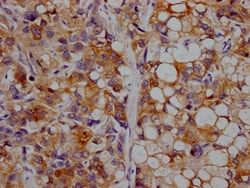
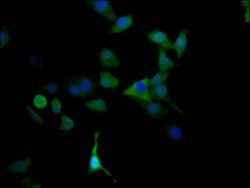
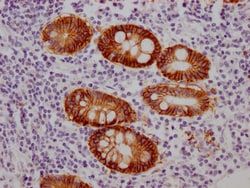
ELISA, Immunocytochemistry, Immunohistochemistry (Paraffin)
Clone
8D4
Conjugate
Unconjugated
Gene
NUP153
Gene Alias
153 kDa nucleoporin, B130015D15Rik, C88147, HNUP153, N153, nuclear pore complex protein hnup153, nuclear pore complex protein Nup153, nucleoporin 153, nucleoporin 153kD, nucleoporin 153kDa, nucleoporin 153kDa L homeolog, nucleoporin Nup153, nucleoporin Nup153 homolog, NUCZINK, nup153, nup153.L, XELAEV_18031694mg
Host Species
Rabbit
Purification Method
Affinity chromatography
Regulatory Status
RUO
Gene ID (Entrez)
9972
Content And Storage
-20°C or -80°C if preferred
Isotype
IgG
Related Products

Description
- Nuclear pore complexes regulate the transport of macromolecules between the nucleus and cytoplasm
- They are composed of at least 100 different polypeptide subunits, many of which belong to the nucleoporin family
- Nucleoporins are glycoproteins found in nuclear pores and contain characteristic pentapeptide XFXFG repeats as well as O-linked N-acetylglucosamine residues oriented towards the cytoplasm
- The protein encoded by this gene has three distinct domains: a N-terminal region containing a pore targeting and an RNA-binding domain, a central region containing multiple zinc finger motifs, and a C-terminal region containing multiple XFXFG repeats
- Alternative splicing results in multiple transcript variants of this gene.