NAPSA Monoclonal Antibody (A9C1), Invitrogen™
Manufacturer: Thermo Scientific
Select a Size
| Pack Size | SKU | Availability | Price |
|---|---|---|---|
| Each of 1 | FEMA550615-Each-of-1 | In Stock | ₹ 41,741.00 |
FEMA550615 - Each of 1
In Stock
Quantity
1
Base Price: ₹ 41,741.00
GST (18%): ₹ 7,513.38
Total Price: ₹ 49,254.38
Antigen
NAPSA
Classification
Monoclonal
Concentration
2 mg/mL
Formulation
PBS with 0.1% BSA, 40% glycerol and 0.05% sodium azide; pH 7.4
Gene Accession No.
O96009
Gene Symbols
NAPSA
Immunogen
Recombinant protein within human NAPSIN A aa 51-200/420.
Quantity
100 μL
Primary or Secondary
Primary
Target Species
Human
Form
Liquid
Applications
Immunocytochemistry, Immunohistochemistry (Paraffin)
Clone
A9C1
Conjugate
Unconjugated
Gene
NAPSA
Gene Alias
asp 4, ASP4, Aspartyl protease 4, KAP, Kdap, KDAP-1, kidney-derived aspartic protease-like protein, Nap, NAP1, NAPA, Napsa, napsin A aspartic peptidase, napsin-1, Napsin-A, pronapsin, pronapsin A, SNAPA, TA01/TA02
Host Species
Mouse
Purification Method
Protein A
Regulatory Status
RUO
Gene ID (Entrez)
9476
Content And Storage
Store at 4°C short term. For long term storage, store at -20°C, avoiding freeze/thaw cycles.
Isotype
IgG1
Related Products
Description
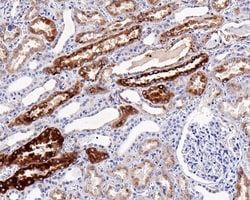
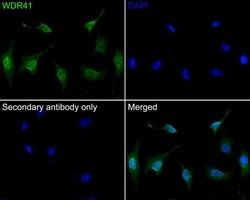
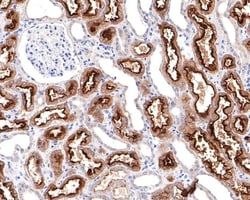
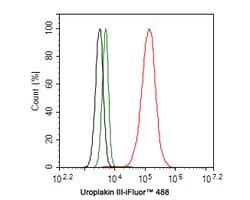
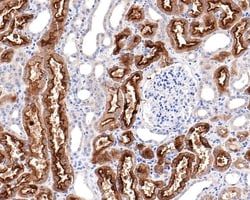
- Positive control: Human kidney tissue, human lung carcinoma tissue, A549
- Predicted band size: 45 kDa Subcellular Location: Secreted
- Napsin 1 is an aspartic protease that is generally expressed in the lung, but also present in kidney and in metastatic carcinomas throughout the body
- Napsin 1 processes surfactant protein B in healthy pulmonary and renal tissues, but is abnormally regulated when carcinogenesis occurs
- Thus, many researchers have found napsin evaluation to be useful in identifying several cancers, and differentiating primary tumors from metastases
- When combined with thyroid transcription factor analysis, napsin can be used as a specific biomarker for differentiation of carcinoma types
- Napsin has also been associated with pulmonary alveolar proteinosis as well as in protein catabolism in renal tubules.