ACVR2A Monoclonal Antibody (C1), Invitrogen™
Manufacturer: Fischer Scientific
Select a Size
| Pack Size | SKU | Availability | Price |
|---|---|---|---|
| Each of 1 | FEMA551171-Each-of-1 | In Stock | ₹ 38,092.00 |
FEMA551171 - Each of 1
In Stock
Quantity
1
Base Price: ₹ 38,092.00
GST (18%): ₹ 6,856.56
Total Price: ₹ 44,948.56
Antigen
ACVR2A
Classification
Monoclonal
Concentration
1 mg/mL
Formulation
PBS with 50% glycerol and 0.05% Proclin 300, pH 7.4
Gene Accession No.
P27037
Gene Symbols
ACVR2A
Immunogen
Recombinant Human ACVR2A protein, Ala20-Pro135 (Accession #P27037)
Quantity
200 μL
Primary or Secondary
Primary
Target Species
Human, Porcine
Form
Liquid
Applications
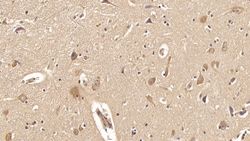
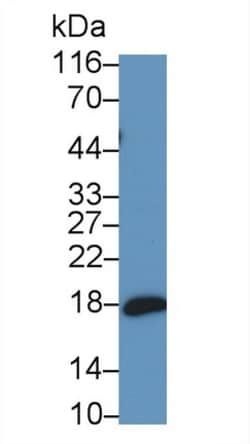
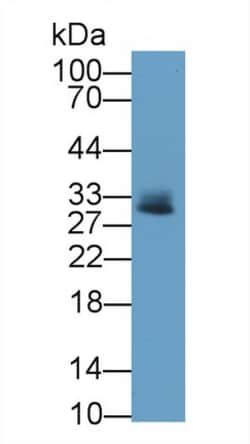
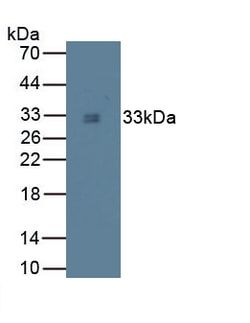
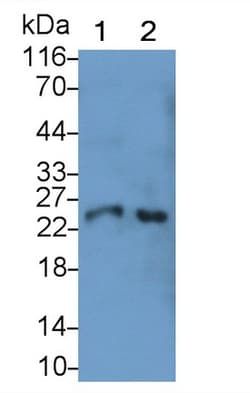
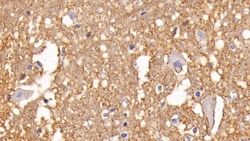
Immunocytochemistry, Immunohistochemistry (Paraffin), Western Blot
Clone
C1
Conjugate
Unconjugated
Gene
ACVR2A
Gene Alias
activin A receptor type 2A, activin A receptor type IIA, activin A receptor, type IIA, activin receptor IIA, activin receptor type IIA, Activin receptor type-2A, Actrii, ActrIIa, ACTR-IIA, ACVR2, Acvr2a, rActR-II, TactrII, type II activin receptor
Host Species
Mouse
Purification Method
Protein A/G
Regulatory Status
RUO
Gene ID (Entrez)
397282, 92
Content And Storage
Store at 4°C short term. For long term storage, store at -20°C, avoiding freeze/thaw cycles.
Isotype
IgG2b κ
Related Products
Description
- Activin A receptor kinase (ACVR2A) is a type II member of the TGF-beta family of receptor Serine/Threonine kinases
- ACVR2A is involved in the activin and myostatin signaling pathway
- (ACVR2A Aliases: ACVR2, ACTRII)
- These receptors are all transmembrane proteins, composed of a ligand-binding extracellular domain with cysteine-rich region, a transmembrane domain, and a cytoplasmic domain with predicted serine/threonine specificity
- Type I receptors are essential for signaling, and type II receptors are required for binding ligands and for expression of type I receptors
- Type I and II receptors form a stable complex after ligand binding, resulting in phosphorylation of type I receptors by type II receptors
- Type II receptors are considered to be constitutively active kinases.