OP119100UG
MilliporeSigma™ anti-c-ErbB3 Clone: H3.90.6 or Ab90,
Manufacturer: MilliporeSigma™
Select a Size
| Pack Size | SKU | Availability | Price |
|---|---|---|---|
| Each of 1 | OP119100UG-Each-of-1 | In Stock | ₹ 76,485.71 |
OP119100UG - Each of 1
In Stock
Quantity
1
Base Price: ₹ 76,485.71
GST (18%): ₹ 13,767.428
Total Price: ₹ 90,253.138
Antigen
c-ErbB3
Classification
Monoclonal
Conjugate
Unconjugated
Host Species
Mouse
Quantity
100 μg
Primary or Secondary
Primary
Target Species
Human
Form
Purified
Applications
Flow Cytometry, Immunofluorescence, Immunoprecipitation
Clone
H3.90.6 or Ab90
Formulation
In 10mM PBS, pH 7.4.
Immunogen
recombinant, human ErbB3 extracellular domain
Regulatory Status
RUO
Test Specificity
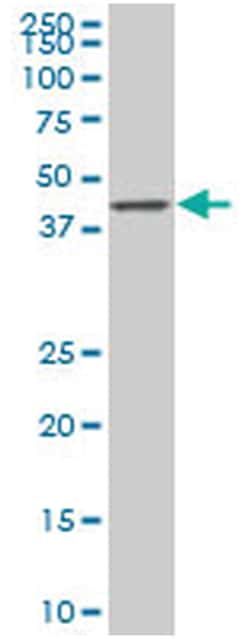
Recognizes the ∽185kDa c-ErbB3/HER3 protein in T47D cells and breast carcinoma tissue.
Content And Storage
−20°C
Isotype
IgG2a
Related Products




Description
- Specifically detects c-ErbB3 Clone: H3.90.6 or Ab90 in Human samples, and it is validated for Flow Cytometry, Immunofluorescence, Immunoprecipitation ErbB3/HER3, a member of the epidermal growth factor receptor (EGF-R) family, was originally isolated as a cDNA clone from a human carcinoma cell line
- The molecule is transcribed from a 6-kilobase mRNA, which can be identified in a variety of different tissues
- Epidermal growth factor (EGF) initiates its effects on cell growth through interaction with a 170,000 dalton cell surface glycoprotein receptor
- Binding of EGF, amphiregulin, or transforming growth factor-alpha (TGF-α) to the receptor or to other members of the receptor family activates a tyrosine-specific protein kinase intrinsic to the EGF-receptor protein family
- While there is a large degree of conserved homology between the cytoplasmic regions of EGF-R and HER2/neu, the HER3 molecule is more unique
- This observation suggests that HER3 is subject to regulatory signals distinct from those affecting EGF-R and HER2/ neu and, therefore, signals an alternate biochemical response
- In particular, it has been shown that the ligand for HER3 is NDF/heregulin a property shared with HER4
- c-ErbB3/HER3 is overexpressed in a variety of tumors (e.g., breast, stomach, pancreas and colon).