PA1980A
GFP Polyclonal Antibody, Invitrogen™
Manufacturer: Thermo Scientific
Select a Size
| Pack Size | SKU | Availability | Price |
|---|---|---|---|
| Each of 1 | PA1980A-Each-of-1 | In Stock | ₹ 39,872.00 |
PA1980A - Each of 1
In Stock
Quantity
1
Base Price: ₹ 39,872.00
GST (18%): ₹ 7,176.96
Total Price: ₹ 47,048.96
Antigen
GFP
Classification
Polyclonal
Conjugate
Unconjugated
Gene Alias
GFP; GFP tag; GFP2; green fluorescence; green fluorescent; Turbo eGFP
Immunogen
Synthetic Peptide: H(26) K F S V S G E G E G D A T(39) C
Quantity
100 μL
Primary or Secondary
Primary
Content And Storage
-20° C, Avoid Freeze/Thaw Cycles
Form
Liquid
Target Molecule
Tag
Applications
Immunocytochemistry, Western Blot
Concentration
1 mg/mL
Formulation
PBS with 1mg/mL BSA and 0.05% sodium azide
Host Species
Rabbit
Purification Method
Antigen affinity chromatography
Regulatory Status
RUO
Target Species
Tag
Product Type
Antibody
Isotype
IgG
Related Products


Description
- PA1-980A detects Green Fluorescent Protein (GFP)
- PA1-980A has been successfully used in Western blot and immunofluoresence procedures
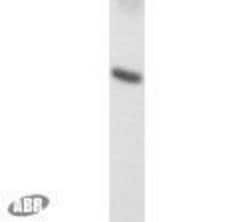
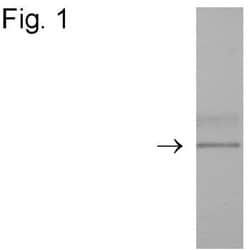
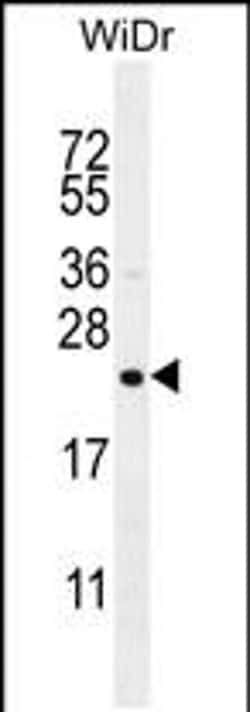
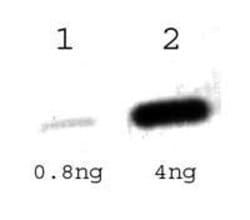
- By Western blot, this antibody detects recombinant GFP
- PA1-980A immunizing peptide corresponds to the N-terminal amino acid residues 26-39 of Aequorea victoria wild-type GFP
- This sequence is completely conserved between GFP and the modified and enhanced Blue, Green, and Yellow FP variants
- PA1-980A immunizing peptide (Cat
- # PEP-033) is available for use in neutralization and control experiments
- The jellyfish Aequorea victoria contains green fluorescent protein (GFP Tag) that emits light in the bioluminescence reaction of the animal
- GFP has been used widely as a reporter protein for gene expression in eukaryotic and prokaryotic organisms, and as a protein tag in cell culture and in multicellular organisms
- As a fusion tag, GFP can be used to localize proteins, to study their movement or to research the dynamics of the subcellular compartments where these proteins are targeted
- GFP technology has revealed considerable new insights in the physiological activities of living cells
- GFP is a 27 kDa monomeric protein, which autocatalytically forms a fluorescent pigment
- The wild type protein absorbs blue light (maximally at 395nm) and emits green light (peak emission 508nm) in the absence of additional proteins, substrates, or co-factors
- GFP fluorescence is stable, species independent and is suitable for a variety of applications
- GFP has been used extensively as a fluorescent tag to monitor gene expressin and protein localization
- Moreover, other applications for GFP include its use in assessing protein protein interactions in the yeast two hybrid system, and in measuring distances between proteins in fluorescence energy transfer (FRET) experiments.