FOXE1 Polyclonal Antibody, Invitrogen™
Manufacturer: Thermo Scientific
Select a Size
| Pack Size | SKU | Availability | Price |
|---|---|---|---|
| Each of 1 | PA549759-Each-of-1 | In Stock | ₹ 46,502.50 |
PA549759 - Each of 1
In Stock
Quantity
1
Base Price: ₹ 46,502.50
GST (18%): ₹ 8,370.45
Total Price: ₹ 54,872.95
Antigen
FOXE1
Classification
Polyclonal
Conjugate
Unconjugated
Gene
FOXE1
Gene Alias
FKHL15; forkhead box E1; forkhead box E1 (thyroid transcription factor 2); forkhead box E2; forkhead box protein E1; Forkhead box protein E2; forkhead, drosophila, homolog-like 15; forkhead-related protein FKHL15; Foxe1; FOXE2; HFKH4; HFKL5; HNF-3/fork head-like protein 5; NMTC4; Thyroid transcription factor 2; Titf2; TTF2; TTF-2
Host Species
Rabbit
Purification Method
Antigen affinity chromatography
Regulatory Status
RUO
Gene ID (Entrez)
110805, 192274, 2304
Content And Storage
-20°C
Form
Liquid
Applications
Western Blot
Concentration
1 mg/mL
Formulation
PBS with 50% glycerol and 0.02% sodium azide; pH 7.4
Gene Accession No.
O00358, Q8R2I0
Gene Symbols
FOXE1
Immunogen
Synthesized peptide derived from internal of human TTF2.
Quantity
100 μL
Primary or Secondary
Primary
Target Species
Human, Mouse, Rat
Product Type
Antibody
Isotype
IgG
Related Products
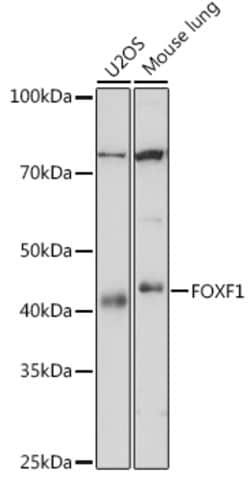
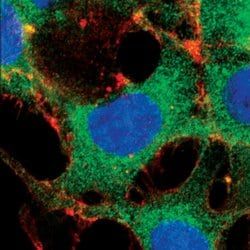
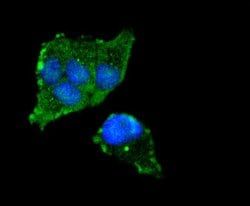
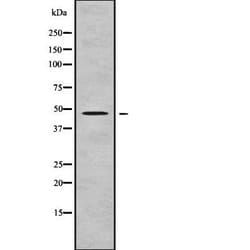

Description
- The antibody detects endogenous levels of total FOXE1 protein
- This intronless gene belongs to the forkhead family of transcription factors, which is characterized by a distinct forkhead domain
- This gene functions as a thyroid transcription factor which likely plays a crucial role in thyroid morphogenesis
- Mutations in this gene are associated with congenital hypothyroidism and cleft palate with thyroid dysgenesis
- The map localization of this gene suggests it may also be a candidate gene for squamous cell epithelioma and hereditary sensory neuropathy type I.