MMP28 Polyclonal Antibody, Invitrogen™
Manufacturer: Thermo Scientific
Select a Size
| Pack Size | SKU | Availability | Price |
|---|---|---|---|
| Each of 1 | PA550237-Each-of-1 | In Stock | ₹ 46,502.50 |
PA550237 - Each of 1
In Stock
Quantity
1
Base Price: ₹ 46,502.50
GST (18%): ₹ 8,370.45
Total Price: ₹ 54,872.95
Antigen
MMP28
Classification
Polyclonal
Conjugate
Unconjugated
Gene
MMP28
Gene Alias
D130023P12; Epilysin; matrix metallo protease; matrix metallopeptidase 28; matrix metallopeptidase 28 (epilysin); matrix metalloprotease MMP25; matrix metalloproteinase 28 (epilysin); matrix metalloproteinase-28; MM28; MMP; MMP25; MMP-25; Mmp28; MMP-28; MMPs; PRO4339; UNQ1893; UNQ1893/PRO4339
Host Species
Rabbit
Purification Method
Antigen affinity chromatography
Regulatory Status
RUO
Gene ID (Entrez)
118453, 79148
Content And Storage
-20°C
Form
Liquid
Applications
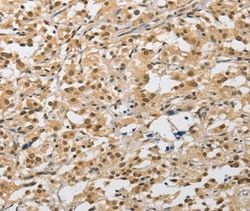
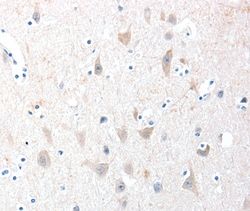
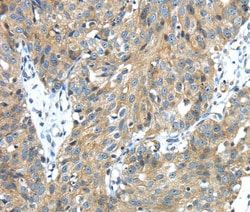
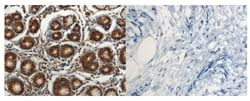
Immunohistochemistry (Paraffin), Western Blot
Concentration
0.6 mg/mL
Formulation
PBS with 40% glycerol and 0.05% sodium azide; pH 7.4
Gene Accession No.
Q9H239
Gene Symbols
MMP28
Immunogen
Fusion protein corresponding to residues near the C terminal of human matrix metallopeptidase 28
Quantity
100 μL
Primary or Secondary
Primary
Target Species
Human, Mouse
Product Type
Antibody
Isotype
IgG
Related Products


Description
- The antibody detects endogenous levels of total MMP28 protein
- Epilysin, also known as matrix metalloproteinase-28 (MMP-28), is a secreted protein that belongs to the peptidase M10A family
- Matrix metalloproteinase proteins are responsible for the breakdown of the extracellular matrix which is important for normal physiological processes such as tissue remodeling, reproduction and embryonic development
- Epilysin is produced by proliferating keratinocytes and is responsible for mediating the degradation of casein
- Its expression is upregulated in response to injury of the skin suggesting that Epilysin may be involved in tissue repair and homeostasis
- In addition, Epilysin may function predominantly in the nervous system
- Incubation of Epilysin with rat embryonic brain tissue results in the degradation of myelin proteins
- In Xenopus, Epilysin localizes to nerves and is upregulated during neurulation
- This suggests that Epilysin plays an evolutionarily conserved role in neural development and may be involved in modulating the axonal-glial extracellular environment.