PA550329
NAPSA Polyclonal Antibody, Invitrogen™
Manufacturer: Thermo Scientific
Select a Size
| Pack Size | SKU | Availability | Price |
|---|---|---|---|
| Each of 1 | PA550329-Each-of-1 | In Stock | ₹ 45,968.50 |
PA550329 - Each of 1
In Stock
Quantity
1
Base Price: ₹ 45,968.50
GST (18%): ₹ 8,274.33
Total Price: ₹ 54,242.83
Antigen
NAPSA
Classification
Polyclonal
Conjugate
Unconjugated
Gene
NAPSA
Gene Alias
asp 4; ASP4; Aspartyl protease 4; KAP; Kdap; KDAP-1; kidney-derived aspartic protease-like protein; Nap; NAP1; NAPA; Napsa; napsin A aspartic peptidase; napsin-1; Napsin-A; pronapsin; pronapsin A; SNAPA; TA01/TA02
Host Species
Rabbit
Purification Method
Antigen affinity chromatography
Regulatory Status
RUO
Gene ID (Entrez)
16541, 9476
Content And Storage
-20°C
Form
Liquid
Applications
Immunohistochemistry (Paraffin), Western Blot
Concentration
2.3 mg/mL
Formulation
PBS with 40% glycerol and 0.05% sodium azide; pH 7.4
Gene Accession No.
O09043, O96009
Gene Symbols
NAPSA
Immunogen
Fusion protein corresponding to residues near the C terminal of human napsin A aspartic peptidase
Quantity
100 μL
Primary or Secondary
Primary
Target Species
Human, Mouse
Product Type
Antibody
Isotype
IgG
Related Products

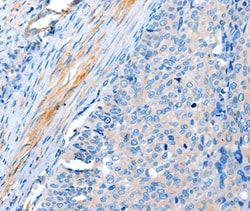
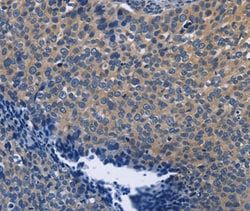
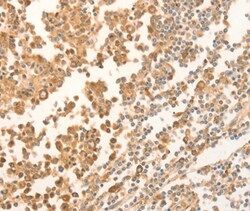

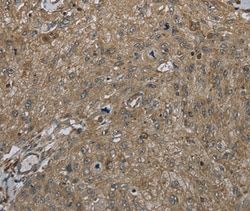
Description
- The antibody detects endogenous levels of total Napsin A protein
- Napsin 1 is an aspartic protease that is generally expressed in the lung, but also present in kidney and in metastatic carcinomas throughout the body
- Napsin 1 processes surfactant protein B in healthy pulmonary and renal tissues, but is abnormally regulated when carcinogenesis occurs
- Thus, many researchers have found napsin evaluation to be useful in identifying several cancers, and differentiating primary tumors from metastases
- When combined with thyroid transcription factor analysis, napsin can be used as a specific biomarker for differentiation of carcinoma types
- Napsin has also been associated with pulmonary alveolar proteinosis as well as in protein catabolism in renal tubules.