PA550350
GPM6A Polyclonal Antibody, Invitrogen™
Manufacturer: Thermo Scientific
Select a Size
| Pack Size | SKU | Availability | Price |
|---|---|---|---|
| Each of 1 | PA550350-Each-of-1 | In Stock | ₹ 52,332.00 |
PA550350 - Each of 1
In Stock
Quantity
1
Base Price: ₹ 52,332.00
GST (18%): ₹ 9,419.76
Total Price: ₹ 61,751.76
Antigen
GPM6A
Classification
Polyclonal
Conjugate
Unconjugated
Gene
GPM6A
Gene Alias
glycoprotein m6a; GPM6; Gpm6a; M6A; neuronal membrane glycoprotein M6-a; neuronal membrane glycoprotein M6-a-like
Host Species
Rabbit
Purification Method
Antigen affinity chromatography
Regulatory Status
RUO
Gene ID (Entrez)
234267, 2823, 306439
Content And Storage
-20°C
Form
Liquid
Applications
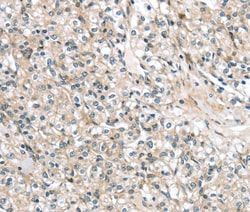
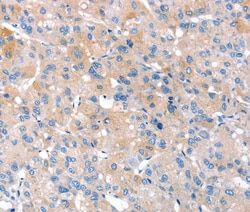
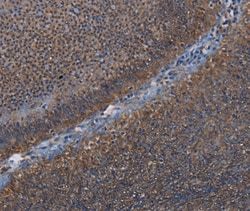
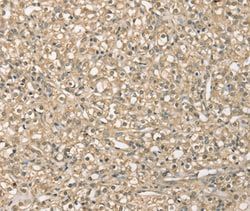
Immunohistochemistry (Paraffin), Western Blot
Concentration
1.9 mg/mL
Formulation
PBS with 40% glycerol and 0.05% sodium azide; pH 7.4
Gene Accession No.
P35802, P51674, Q812E9
Gene Symbols
GPM6A
Immunogen
Fusion protein corresponding to a region derived from internal residues of human glycoprotein M6A
Quantity
100 μL
Primary or Secondary
Primary
Target Species
Human, Mouse, Rat
Product Type
Antibody
Isotype
IgG
Related Products

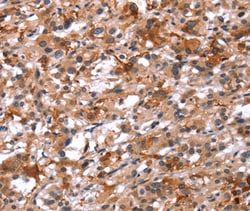

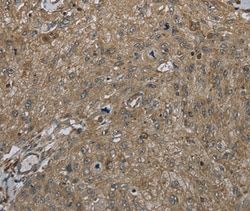
Description
- The antibody detects endogenous levels of total GPM6A protein
- Neuronal membrane glycoprotein M6-a is a protein that in humans is encoded by the GPM6A gene
- Involved in neuronal differentiation, including differentiation and migration of neuronal stem cells
- Plays a role in neuronal plasticity and is involved in neurite and filopodia outgrowth, filopodia motility and probably synapse formation
- GPM6A-induced filopodia formation involves mitogen-activated protein kinase (MAPK) and Src signaling pathways
- May be involved in neuronal NGF-dependent Ca2+ influx
- May be involved in regulation of endocytosis and intracellular trafficking of G-protein-coupled receptors (GPCRs); enhances internalization and recycling of mu-type opioid receptor.