KCNK13 Polyclonal Antibody, Invitrogen™
Manufacturer: Thermo Scientific
Select a Size
| Pack Size | SKU | Availability | Price |
|---|---|---|---|
| Each of 1 | PA550434-Each-of-1 | In Stock | ₹ 47,036.50 |
PA550434 - Each of 1
In Stock
Quantity
1
Base Price: ₹ 47,036.50
GST (18%): ₹ 8,466.57
Total Price: ₹ 55,503.07
Antigen
KCNK13
Classification
Polyclonal
Conjugate
Unconjugated
Gene
KCNK13
Gene Alias
BB085247; F730021E22Rik; Gm1570; Gm1685; K2p13.1; K2P13.1 potassium channel; KCNK13; Potassium channel subfamily K member 13; potassium channel, subfamily K, member 13; potassium channel, two pore domain subfamily K, member 13; potassium two pore domain channel subfamily K member 13; prdx1; Tandem pore domain halothane-inhibited potassium channel 1; tandem pore domain potassium channel THIK-1; THIK1; THIK-1
Host Species
Rabbit
Purification Method
Antigen affinity chromatography
Regulatory Status
RUO
Gene ID (Entrez)
217826, 56659
Content And Storage
-20°C
Form
Liquid
Applications
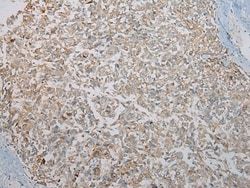
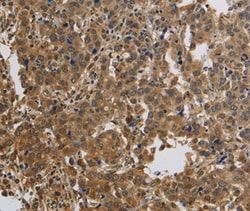
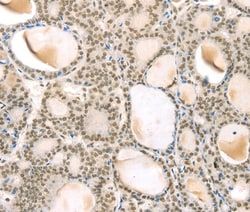
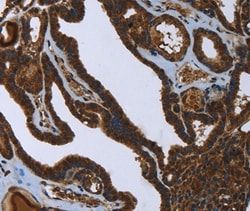
Immunohistochemistry (Paraffin), Western Blot
Concentration
2 mg/mL
Formulation
PBS with 40% glycerol and 0.05% sodium azide; pH 7.4
Gene Accession No.
Q8R1P5, Q9HB14
Gene Symbols
KCNK13
Immunogen
Fusion protein corresponding to a region derived from internal residues of human potassium channel, subfamily K, member 13
Quantity
100 μL
Primary or Secondary
Primary
Target Species
Human, Mouse
Product Type
Antibody
Isotype
IgG
Related Products



Description
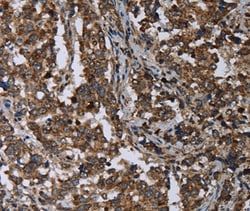
- The antibody detects endogenous levels of total KCNK13 protein
- Potassium channels represent the most complex class of voltage-gated ion channels from both functional and structural standpoints
- Their diverse functions include regulating neurotransmitter release, heart rate, insulin secretion, neuronal excitability, epithelial electrolyte transport, smooth muscle contraction, and cell volume
- This gene encodes a potassium channel containing two pore-forming domains
- This protein is an open channel that can be stimulated by arachidonic acid and inhibited by the anesthetic halothane.