PA550589
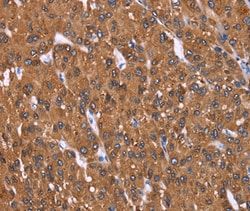
FZD8 Polyclonal Antibody, Invitrogen™
Manufacturer: Thermo Scientific
Select a Size
| Pack Size | SKU | Availability | Price |
|---|---|---|---|
| Each of 1 | PA550589-Each-of-1 | In Stock | ₹ 46,502.50 |
PA550589 - Each of 1
In Stock
Quantity
1
Base Price: ₹ 46,502.50
GST (18%): ₹ 8,370.45
Total Price: ₹ 54,872.95
Antigen
FZD8
Classification
Polyclonal
Conjugate
Unconjugated
Gene
Fzd8
Gene Alias
frizzled 8, seven transmembrane spanning receptor; frizzled class receptor 8; frizzled family receptor 8; frizzled homolog 8; frizzled homolog 8 (Drosophila); frizzled-8; Fz8; Fz-8; Fzd8; hFZ8; HGNC:4046
Host Species
Rabbit
Purification Method
Antigen affinity chromatography
Regulatory Status
RUO
Gene ID (Entrez)
14370, 364754, 8325
Content And Storage
-20°C
Form
Liquid
Applications
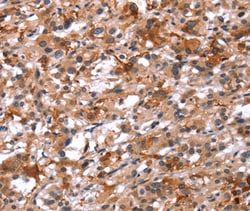
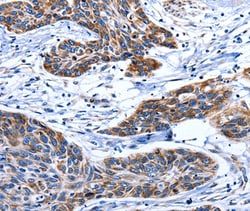
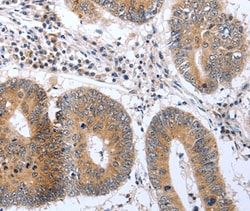
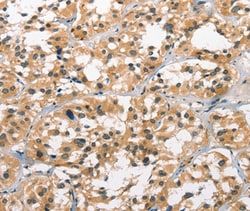
Immunohistochemistry (Paraffin)
Concentration
1.1 mg/mL
Formulation
PBS with 40% glycerol and 0.05% sodium azide; pH 7.4
Gene Accession No.
Q498S8, Q61091, Q9H461
Gene Symbols
Fzd8
Immunogen
Synthetic peptide corresponding to residues near the C terminal of human frizzled family receptor 8
Quantity
100 μL
Primary or Secondary
Primary
Target Species
Human, Mouse, Rat
Product Type
Antibody
Isotype
IgG
Related Products



Description
- The antibody detects endogenous levels of total FZD8 / Frizzled 8 protein
- Members of the Frizzled family encode seven-transmembrane domain proteins that are receptors for the Wingless type MMTV integration site family of signaling proteins
- Most frizzled receptors are coupled to the beta-catenin canonical signaling pathway
- Frizzled 8 is highly expressed in two human cancer cell lines, indicating that it may play a role in several types of cancer
- Its expression has been reported in brain, heart, kidney, pancreas, and skeletal muscle
- ESTs have been isolated from embryo, eye, head/neck, heart, kidney, liver/spleen, pancreas, prostate, and testis libraries, as well as many tumor libraries
- The crystal structure of the extracellular cysteine-rich domain of a similar mouse protein has been determined.