PA550633
IBSP Polyclonal Antibody, Invitrogen™
Manufacturer: Thermo Scientific
Select a Size
| Pack Size | SKU | Availability | Price |
|---|---|---|---|
| Each of 1 | PA550633-Each-of-1 | In Stock | ₹ 46,413.50 |
PA550633 - Each of 1
In Stock
Quantity
1
Base Price: ₹ 46,413.50
GST (18%): ₹ 8,354.43
Total Price: ₹ 54,767.93
Antigen
IBSP
Classification
Polyclonal
Conjugate
Unconjugated
Gene
Ibsp
Gene Alias
BNSP; Bone sialoprotein 2; bone sialoprotein II; Bsp; BSP II; Bsp2; BSPII; BSP-II; Cell-binding sialoprotein; IBSP; integrin binding sialoprotein; integrin-binding sialoprotein; SP-II
Host Species
Rabbit
Purification Method
Antigen affinity chromatography
Regulatory Status
RUO
Gene ID (Entrez)
3381
Content And Storage
-20°C
Form
Liquid
Applications
Immunohistochemistry (Paraffin), Western Blot
Concentration
1.4 mg/mL
Formulation
PBS with 40% glycerol and 0.05% sodium azide; pH 7.4
Gene Accession No.
P21815
Gene Symbols
Ibsp
Immunogen
Synthetic peptide corresponding to a region derived from internal residues of human integrin-binding sialoprotein
Quantity
100 μL
Primary or Secondary
Primary
Target Species
Human
Product Type
Antibody
Isotype
IgG
Related Products

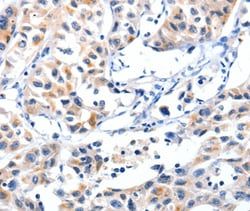


Description
- The antibody detects endogenous levels of total IBSP protein
- The protein encoded by this gene is a major structural protein of the bone matrix
- It constitutes approximately 12% of the noncollagenous proteins in human bone and is synthesized by skeletal-associated cell types, including hypertrophic chondrocytes, osteoblasts, osteocytes, and osteoclasts
- The only extraskeletal site of its synthesis is the trophoblast
- This protein binds to calcium and hydroxyapatite via its acidic amino acid clusters, and mediates cell attachment through an RGD sequence that recognizes the vitronectin receptor.